Community engagement
How to Move Your Facebook Group to a Coaching Community (Without Losing Engagement)
Moving clients from your Facebook group to a coaching community can feel risky. But when conversations, content & sessions are structured in one place, engagement gets better. Learn how to transition smoothly without hurting your coaching experience.
Contents
Many coaches start with Facebook groups because they feel simple and accessible. In the early days, they work well. Conversations are active, posts get responses, and the space feels alive.
But over time, a familiar pattern begins to emerge. Reach becomes inconsistent, posts are seen by fewer members, and your Facebook group starts getting low engagement.
This shift is rarely about the quality of your coaching. It is a result of how the platform works. As Facebook group reach drops, conversations become harder to sustain and participation turns passive. What once felt like a community starts to feel like scattered interactions.
This is where many coaches begin to consider how to move a Facebook group to a coaching community. Not to replace communication, but to create a system where engagement is more predictable and structured. A coaching community platform brings discussions, content, and interactions into one place where participation is easier to maintain.
Moving a Facebook group to a coaching community means shifting from algorithm-controlled engagement to a structured environment where discussions, progress, and participation are fully owned.
If you’re exploring this transition as part of building a more structured system, it helps to understand how to move your coaching business to a branded community and what that shift actually involves.
In this guide, you’ll see why Facebook groups start to break down, what works better in a community-driven setup, and how to make the transition without losing engagement.
TL;DR
Facebook groups often feel effective at the start, but over time, declining reach, unstructured conversations, and using multiple tools make engagement harder to sustain. Moving to a coaching community is not about switching platforms, but about creating a system where participation, discussions, and progress are organized in one place. When the transition is done gradually, engagement does not drop; it becomes easier to maintain. This guide breaks down how to move your Facebook group step by step without disrupting your coaching experience.
Why Facebook Groups Stop Working for Coaching Businesses
At first, Facebook groups feel like the easiest way to bring clients together. They remove friction, keep everything in one place, and make interaction feel natural. But as the group grows, the experience begins to change. Posts get fewer responses, conversations slow down, and low engagement becomes harder to ignore.
This shift is not random. It is driven by how the platform is designed. As Facebook group reach drops and visibility becomes inconsistent, even once active communities start to feel quieter. What worked early on begins to break as the system scales.
Reach Drops Due to Algorithm
One of the biggest challenges with Facebook groups is that not every member sees every post. The platform decides what appears in each person’s feed, which means your content does not reach your entire community consistently.
While estimates often suggest organic reach in Facebook groups can range from 6.5% to 30%, depending on the community size, many posts reach far fewer.
Even when you share something valuable, a large portion of your members may never see it. This creates gaps in communication and makes engagement unpredictable. Over time, it becomes difficult to maintain consistent interaction when visibility itself is uncertain.
Engagement Becomes Passive
As reach becomes inconsistent, behavior inside the group also changes. Members scroll through posts when they appear in their feed, but they participate less actively. Conversations shift from interaction to observation.
This passive engagement is subtle but important. People are still present, but they contribute less. Without regular participation, the sense of community begins to weaken, even if the group still has active members.
Discussions Become Hard to Follow
Another common issue is how conversations are structured. Facebook groups are not designed for organized discussions. Threads are limited, replies get buried, and it becomes difficult to revisit important conversations later.
This often leads to messy discussions where valuable insights are scattered across comments and posts. Members may ask the same questions repeatedly because earlier answers are hard to find. As a result, conversations lose continuity and depth.
You Don’t Own the Platform
Perhaps the most important limitation is control. When your community exists inside Facebook, it operates within rules you do not control. Changes to the algorithm, platform updates, or shifts in visibility can affect how your group functions at any time.
This dependency creates risk. Your ability to engage clients is tied to a system that you do not fully own or manage. As your coaching business grows, this lack of control becomes more noticeable.
This is where most coaching communities start to lose momentum.
Coaching Community vs Facebook Group - What Actually Changes
When coaches compare a coaching community vs Facebook group, the difference is often misunderstood as a feature upgrade. In reality, it is a shift in how coaching client engagement works. The experience changes not because of new tools, but because of how interaction is structured and sustained over time.
Here’s what actually changes when you move from Facebook to a coaching community:
Facebook Group | Coaching Community |
Algorithm controls reach | Full visibility |
Passive scrolling | Active participation |
Mixed conversations | Structured discussions |
No ownership | Fully owned platform |
The most important shift is behavioral.
In a Facebook group, engagement is largely reactive. Members see posts when the platform surfaces them, scroll through updates, and occasionally respond. Participation depends on timing and visibility, not intention.
Inside a coaching community, interaction becomes more deliberate. Members enter the space with a purpose. They know where to share updates, where to ask questions, and where to follow discussions. Conversations are easier to revisit, which makes participation more consistent.
This changes how the community feels. Instead of content being consumed when it appears, engagement becomes something members actively choose to be part of. Over time, this shift from passive to intentional interaction is what strengthens relationships and keeps the community active.
What Replaces Facebook Groups - The Coaching Community System
When coaches look for a Facebook group alternative for coaching, the instinct is often to search for a better tool. But the real shift is not from one platform to another. It is from a communication channel to a system that supports how coaching actually works.
A coaching community platform is not just a place where messages happen. It is an environment where conversations, progress, and interactions are organized in a way that makes participation easier to sustain. This is what allows you to own your community platform instead of relying on algorithms to drive engagement.
A well-designed branded coaching community brings everything into one place, but more importantly, it creates clarity. Members know where to go, how to participate, and how their activity connects to their progress.
The 3-Layer Coaching Community System
A coaching community works best when it is built as a system, not just a space. This system can be understood through three layers that shape how members interact.
Structure: This defines where conversations happen. Instead of a single feed, the community is organized into spaces for discussions, progress updates, and resources. This clarity makes it easier for members to follow conversations and contribute without confusion.
Participation: This is what keeps the community active. Rather than relying on random posts, interaction is guided through simple rhythms such as updates, reflections, and shared discussions. These patterns make engagement more consistent and reduce hesitation about contributing.
Visibility: This is what reinforces momentum. When members can see others sharing progress, asking questions, and moving forward, the community feels alive. Progress becomes visible, which encourages more participation and strengthens the sense of shared journey.
Together, these layers shift the experience from scattered communication to a connected system. Instead of relying on interactions that may or may not happen, the community creates an environment where engagement, learning, and progress naturally come together.

How to Move Your Facebook Group to a Coaching Community
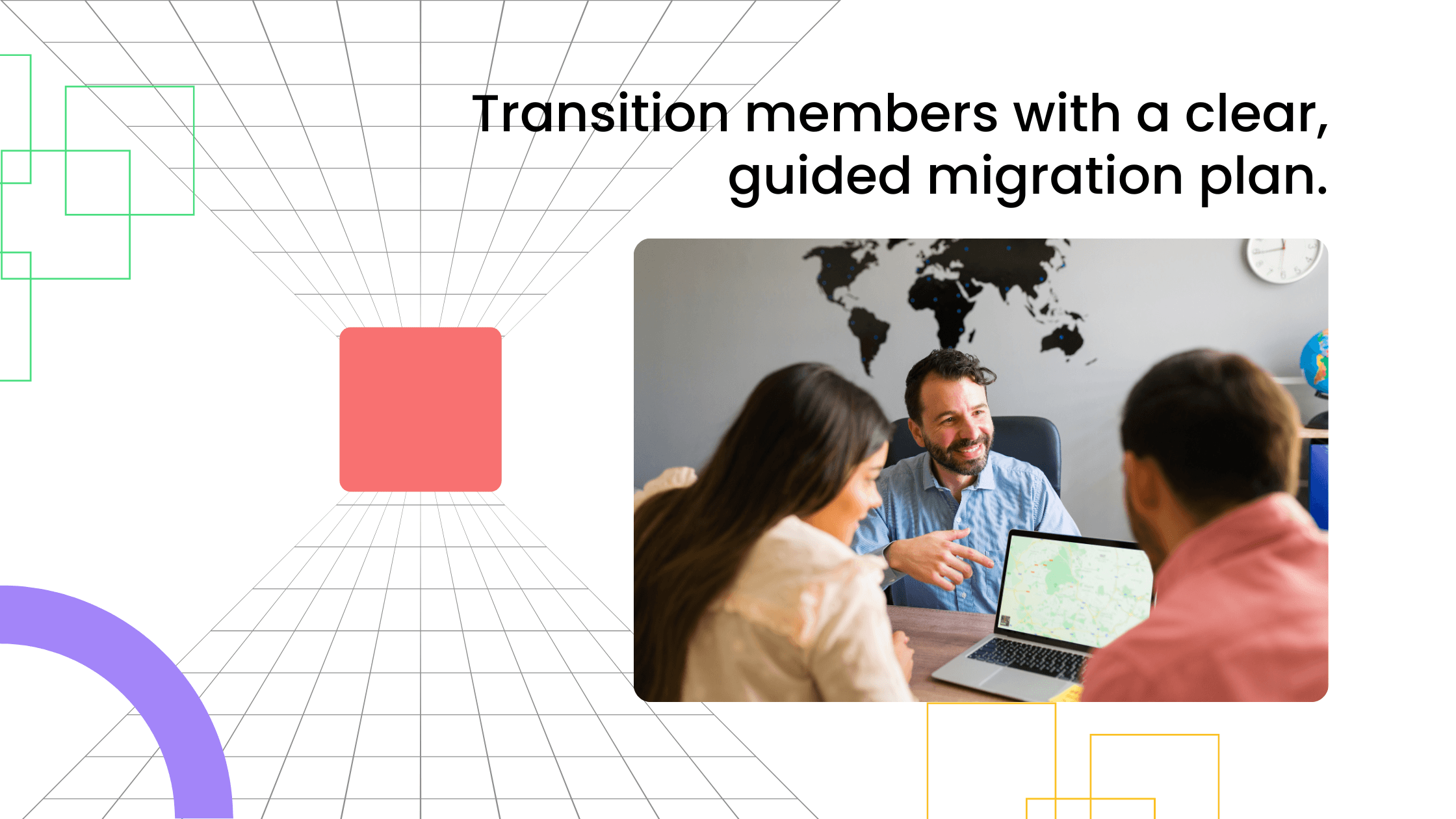
For many coaches, the biggest hesitation is not whether a community works better, but how to make the transition without losing engagement. The good news is that when done correctly, moving your group does not disrupt participation. It improves it.
If you’re wondering how to move Facebook group to a coaching community without creating confusion or resistance, the key is to treat the shift as a gradual transition rather than an one-shot switch. When the process feels simple and guided, members adapt naturally.
Step 1 - Start with a Core Use Case
The easiest way to begin is to avoid moving everything at once. When too many changes happen together, members feel uncertain about where to engage and what to do.
Instead, start with one clear use case. This could be a discussion space for weekly updates, post-session reflections, or a focused conversation thread. When members experience how this interaction becomes easier to follow inside the community, they begin to understand its value.
Starting small creates clarity. It allows the new space to feel useful without overwhelming your members.
Step 2 - Introduce the Community Gradually
Once the initial use case is working, expand slowly. Introduce more interactions into the community while keeping the Facebook group active in parallel.
This approach reduces resistance. Members are not forced to abandon what they are familiar with. Instead, they begin using the new space for specific activities, which gradually become part of their routine. Over time, familiarity builds comfort, and comfort leads to adoption.
Gradual introduction makes the transition feel natural rather than disruptive.
Step 3 - Guide First Interactions
The first interaction inside the community shapes how members perceive the space. If they join but are unsure what to do, they are likely to observe silently and disengage.
Make the first step obvious and simple. Invite members to introduce themselves, share a quick update, or respond to a prompt related to their coaching journey. When the action is clear, participation begins immediately.
Removing hesitation at this stage is critical. Early engagement creates the momentum that keeps the community active.
Step 4 - Use Facebook as a Bridge
A common mistake is shutting down the Facebook group too early. This often creates friction because members lose a familiar space before they are comfortable in the new one.
Instead, use the group as a bridge. Continue using it for reminders or quick announcements while directing meaningful conversations into the community. For example, you can post a question in the group and ask members to respond inside your new community platform.
This approach redirects behavior without forcing change. Over time, members naturally shift where they engage.
Step 5 - Shift Conversations Slowly
As participation grows inside the community, begin moving more discussions into it. Encourage members to share updates, ask questions, and interact within structured spaces where conversations are easier to follow.
Consistency is important here. When you respond inside the community and reinforce its use, members begin to return more often. Gradually, the center of interaction shifts from the Facebook group to the community.
This step-by-step approach makes it possible to move from the Facebook group to your coaching community without losing engagement. Instead of a sudden transition, you create a controlled shift where participation becomes stronger as the new system takes shape.
How to Move Without Losing Engagement
The biggest concern when you move a community off Facebook is simple: will members stop participating? This fear is valid. When people are used to one environment, any change can feel like friction.
In reality, engagement drops only when the transition is rushed or unclear. When the shift is designed carefully, participation often improves because the experience becomes easier to follow and more consistent.
Don’t Force the Transition
A forced move is the fastest way to lose engagement. When members are suddenly asked to leave Facebook and switch entirely to a new space, many hesitate. The change feels abrupt, and participation slows down.
A better approach is to let behavior evolve. When members are given time to adapt, they move naturally instead of resisting the change.
Show Value First
People do not adopt new platforms because they are told to. They adopt them when they experience something better.
Instead of explaining why a community is more effective, let members experience it. When discussions are easier to follow and interactions feel more meaningful, the value becomes obvious without needing justification.
Make Participation Easy
Early participation should feel simple. If joining the community requires too many steps or the next action is unclear, members tend to delay engaging.
A clear starting point changes this. Asking members to share a quick update, respond to a prompt, or introduce themselves removes hesitation. When the first action is easy, engagement begins without friction.
Build Early Momentum
The first few interactions define how the community feels. When members see activity from the beginning, they understand that participation is expected and welcomed.
This does not require a large volume of content. A few meaningful conversations, visible progress updates, and timely responses are enough to create movement. Once momentum builds, participation becomes easier to sustain.
When the transition is handled this way, you do not lose members. You create an environment where engagement becomes stronger over time.
Common Mistakes When Moving from Facebook Groups
Many of the problems with Facebook groups for coaching business continue even after switching platforms if the transition is not handled thoughtfully. The issue is rarely the tool alone, but how the new environment is introduced.
Moving Everything at Once
Trying to shift all conversations and interactions immediately often overwhelms members. When too many changes happen at once, participation slows because people are unsure where to engage.
Not Guiding Members
Without clear direction, members tend to observe rather than participate. If the first steps are not obvious, engagement remains inconsistent even in a better system.
Choosing the Wrong Platform
Not every platform supports structured interaction. If discussions remain disorganized or difficult to follow, the experience feels similar to Facebook, just in a different place.
Ignoring Engagement Systems
A new platform alone does not create engagement. Without clear participation patterns such as updates, discussions, or shared progress, activity remains irregular and hard to sustain.
Tools to Replace Facebook Groups for Coaching
When coaches look for a Facebook group alternative for coaching, the instinct is often to compare features. But what matters more is how the platform supports the coaching experience as a whole.
A coaching community platform works best when it brings everything into one place. Discussions are organized so members can follow and contribute easily. Events create shared experiences where participants interact in real time. Content, such as resources and recordings, remains accessible and connected to ongoing conversations.
This kind of setup reduces fragmentation. Instead of managing multiple tools, coaches operate within a single environment where interactions, learning, and progress are aligned. Members, in turn, experience a clearer journey where participation feels natural rather than forced.
The goal is not to replace Facebook with another tool. It is to create a system where engagement is structured and easier to maintain.
FAQs About Moving From a Facebook Group to a Coaching Community
How to move Facebook group to a coaching community?
The most effective way to move Facebook group to a coaching community is to start gradually. Begin with one use case, guide members toward their first interaction, and keep Facebook as a bridge during the transition. As members experience the benefits of structured discussions, engagement naturally shifts to the new platform.
Why do Facebook groups have low engagement?
Facebook groups often suffer from low engagement because visibility depends on the algorithm. Not all members see every post, conversations become passive, and discussions are harder to follow. Over time, this reduces participation even in active communities.
What is better than Facebook groups for coaching?
A coaching community platform is often more effective because it organizes discussions, events, and content in one place. Instead of scattered interactions, members participate in structured conversations where progress is visible and engagement is easier to sustain.
Can I use both Facebook and a community platform?
Yes, and this is often the best approach during transition. Facebook can be used for reminders or announcements, while the community becomes the main space for discussions and interaction. Over time, most engagement naturally moves into the community.
Final Takeaway - Stop Renting Your Community
Many coaches assume the problem is the platform. In reality, the challenge is ownership and structure.
Facebook is a rented space. A community is a system you own.
Content alone does not guarantee reach. Algorithms control visibility. Ownership creates consistency.
When your coaching business depends on a platform you do not control, engagement will always be unpredictable. But when you create an environment where interactions are structured and visible, participation becomes easier to sustain.
If you want to move your Facebook group into a structured, scalable coaching environment, the focus should not be on replacing a platform but on building a system you own.
Create such a system, an all-in-one, flexible coaching community with Wylo.

About the Author – Senthil
Marketing Head of Wylo, a highly comprehensive and customizable community platform for coaches, brands, and creators. Senthil helps coaches design clear marketing systems, strong positioning, and sustainable monetization models through practical community frameworks and execution-first strategy.