Community engagement
How Events Build Client Relationships in Coaching Communities
Client relationships in coaching community rarely grow through content alone. They grow through shared experiences. This guide explains how structured events create the connection & accountability that keep members engaged long after sessions end.
Contents
Many coaching communities start with strong energy. Members join sessions, learn new ideas, and commit to action. Yet over time, something subtle happens. The sessions continue, but the relationships inside the community remain weak. Members attend calls, listen carefully, and then return to working on their goals alone.
This pattern is common in many coaching programs. Conversations happen during sessions, but meaningful connection between members rarely develops. Without that connection, participation begins to feel transactional rather than collaborative.
The reason is simple: relationships rarely grow through content alone. They grow through shared experiences. This is where coaching community events play an important role. When members interact through structured activities and conversations, they begin to see each other not just as participants in a program but as peers moving through a similar journey.
Coaching community events strengthen relationships by creating shared experiences where members interact, support each other, and participate in growth together.
If you're still building the foundation of your community, it helps to first understand What Is a Coaching Community and Why You Need One, which explains how structured communities support engagement and learning inside coaching programs.
TL;DR
Relationships inside coaching communities rarely grow through sessions or content alone. While coaching calls create insight, real connection develops when members share experiences together. Coaching community events create those moments by bringing members into conversations, activities, and reflections that make progress visible. When relationships strengthen, participation increases. And when participation becomes consistent, communities become the engine that sustains engagement throughout the coaching journey.
Why Relationships Matter in Coaching Communities
Many coaching programs are designed around sessions, content, and structured guidance from the coach. While this approach delivers insight, it can unintentionally make the experience feel transactional. Clients attend calls, receive advice, implement ideas, and return for the next session. The program functions well as a learning environment, but the deeper layer of connection between members often remains underdeveloped.
This gap matters more than many coaches realize. When members feel connected only to the coach, engagement depends heavily on scheduled sessions. Outside those moments, interaction tends to slow down. Over time, the community becomes quiet even when participants remain committed to their goals.
Coaching Programs Often Feel Transactional
Without strong peer relationships, many coaching programs resemble a series of consultations rather than a collaborative environment. Clients show up to learn, share brief updates, and leave with new action steps. While the guidance may be valuable, the overall experience can still feel individual rather than collective.
This structure limits community engagement because participants are not interacting with each other frequently enough to build familiarity and trust. When members do not feel connected to the group, they naturally focus only on their personal progress instead of participating in the wider conversation.
This is one of the reasons coaching clients lose engagement in many programs, especially when there is little interaction between members.
Relationships Strengthen Commitment
When relationships develop within a coaching community, the dynamic changes. Members begin to recognize each other’s journeys, celebrate progress, and offer encouragement during difficult weeks. These small interactions create emotional investment in the group itself.
That investment strengthens commitment. Clients are no longer participating only for the coaching content; they are also returning to the community because they value the relationships they have formed there. This shift is one of the most powerful drivers of coaching community engagement.
Peer Connection Increases Retention
The connection between members also has a direct impact on retention. When participants feel part of a supportive network, they are more likely to stay active throughout the program. Even when motivation fluctuates, the presence of peers who understand their challenges helps sustain momentum.
Peer interaction turns the community into a shared environment for growth rather than a one-directional learning space. Members begin to exchange ideas, discuss implementation, and support each other’s progress between sessions.
Coaching communities become powerful when members feel connected not only to the coach, but also to each other.
When those relationships exist, engagement becomes natural. Conversations continue beyond scheduled sessions, participation becomes more consistent, and the community evolves into a place where members grow faster and together rather than individually and slowly.
Why Coaching Community Events Strengthen Relationships
Relationships inside a coaching community rarely develop by chance. While discussions and shared resources are valuable, deeper connections usually form when members participate in experiences together. This is where community engagement events play an important role.
Events bring members into the same space with a shared purpose. Instead of interacting only through occasional updates or scheduled sessions, participants actively engage with each other in conversations, activities, and reflections. Over time, these moments help transform a group of individuals into a connected community.
Many successful community-building events create environments where members not only learn from the coach but also interact with each other in meaningful ways. These shared experiences strengthen relationships and encourage participation throughout the program.
Shared Experiences Create Stronger Bonds
People tend to form stronger connections when they participate in activities together. In coaching communities, shared experiences create opportunities for members to move beyond passive learning and interact more naturally with one another.
For example, live discussions allow participants to exchange ideas and explore challenges in real time. Implementation challenges encourage members to take action together while sharing their progress. Reflection circles invite members to discuss lessons learned and insights gained from their experiences.
These moments of interaction help members understand each other’s journeys. Instead of feeling like separate participants attending the same program, they begin to recognize the group as a collective space for growth.
Events Make Participation Visible
One reason engagement grows during community events is that participation becomes visible. When members join discussions, share insights, or talk about what they are implementing, others can see progress unfolding across the community.
This visibility encourages involvement. Members observe others learning, experimenting with new ideas, and sharing updates about their progress. Seeing that activity often motivates quieter participants to contribute as well.
Over time, these interactions strengthen community engagement events because members begin to associate the community with ongoing progress rather than occasional conversations.
Events Build Community Identity
Events also help create a sense of identity within the community. When gatherings happen regularly, they become familiar moments that members look forward to.
Weekly discussions, monthly celebrations of milestones, or periodic reflection sessions gradually shape the culture of the group. Members start to recognize these moments as part of the rhythm of the community.
This repetition builds continuity. Instead of feeling like isolated interactions, events become traditions that reinforce the shared journey of the group.
Events Reduce Isolation in Coaching Programs
Many coaching clients spend most of their time working independently on their goals. Even when they attend regular sessions, the majority of implementation happens alone. Over time, this can create a sense of distance from the program.
Events help reconnect members with the group. When participants come together to discuss progress, reflect on challenges, or simply interact with others in the community, the coaching environment feels more supportive and collaborative.
These interactions reduce isolation and remind members that they are not navigating their goals alone. As relationships strengthen, participation becomes more natural, and the community evolves into a space where members support each other’s progress throughout the coaching journey.
Types of Coaching Community Events That Strengthen Relationships
Effective coaching community events create opportunities for members to interact, reflect on their progress, and support each other’s journey. While coaching sessions provide insight and direction, events introduce a different dynamic. They bring members into conversations and shared experiences that help relationships grow naturally within the community.
Not every event needs to be large or highly structured. In many cases, the most effective gatherings are simple formats that encourage participation and interaction. Over time, these recurring events create familiarity, strengthen trust, and help members feel more connected to the group.
Events are one way to encourage participation, but they work best when combined with other engagement systems. This guide on ways to increase engagement in a coaching community explains additional strategies that help members stay active between sessions.
Implementation Sessions
Implementation sessions are one of the most practical group coaching activities a community can host. Instead of focusing on theory, these sessions invite members to talk about what they actually implemented during the week.
A common format is something like an “Implementation Hour,” where participants briefly share actions they took, experiments they tried, and results they observed. Hearing real experiences from peers often sparks new ideas and encourages others to take action as well.
Because these sessions revolve around real progress, they tend to create meaningful discussions. Members see that others are actively applying what they are learning, which reinforces the shared momentum of the community.
Peer Mastermind Sessions
Peer mastermind sessions focus on smaller group discussions where members explore challenges together. Instead of a large call where only a few people speak, participants are divided into groups of four or five members.
Within these small groups, each person has space to share a challenge, ask questions, and receive insights from others. These conversations often feel more personal and collaborative than traditional coaching discussions.
Over time, regular mastermind sessions help members understand each other’s goals, struggles, and progress. This deeper familiarity naturally strengthens relationships within the community.
Reflection Circles
Reflection circles are powerful community engagement activities because they encourage members to slow down and think about their experiences. Rather than focusing on new strategies, these gatherings center on what participants learned during the month.
Members might discuss lessons from implementing a new habit, describe obstacles they encountered, or share insights that shifted their perspective. Listening to different experiences often helps others recognize patterns in their own journey.
These conversations deepen learning while strengthening relationships. When members openly discuss both progress and challenges, the community becomes a place where people feel comfortable sharing their real experiences.
Wins and Milestone Celebrations
Celebrating progress is one of the simplest but most effective community building events. Wins and milestone gatherings highlight the breakthroughs members achieve during the program.
These moments might include acknowledging someone who completed a personal challenge, reached a milestone goal, or implemented a strategy that produced meaningful results. Recognition from peers reinforces motivation and helps members feel seen within the group.
Celebrations also create a positive atmosphere inside the community. When progress is regularly acknowledged, members are reminded that the group is moving forward together.
Live Office Hours
Live office hours are among the most accessible online community events ideas for coaching programs. These sessions create a relaxed environment where members can ask questions, discuss challenges, or simply interact with the coach and other participants.
Unlike structured sessions, office hours often feel more conversational. Members join with questions or topics they want to explore, and the discussion evolves naturally based on the needs of the group.
This informal format often encourages participation from members who may hesitate to speak during larger, organized sessions. As a result, office hours can become valuable opportunities for interaction and connection.
Accountability Check-Ins
Accountability check-ins are simple but effective coaching community engagement ideas that help members stay focused on their goals. These sessions provide a moment for participants to share their commitments and reflect on what they accomplished since the previous check-in.
Weekly accountability gatherings often create a sense of shared responsibility. Members know that others are working toward their goals as well, which encourages consistency and follow-through.
Because these discussions focus on progress rather than perfection, they often create supportive conversations where participants encourage each other to keep moving forward.
Community Hangouts
Community hangouts are informal virtual events for coaching community members where the primary goal is connection rather than structured learning. These gatherings might take the form of casual coffee chats, open conversations, or relaxed discussion sessions.
In these environments, members talk about their experiences, share stories from their journey, or simply get to know each other beyond the context of the coaching program.
Although these events may seem simple and slightly overlapping, they play an important role in building familiarity and trust. Over time, these relaxed interactions help transform a group of participants into a community where relationships develop naturally.

How to Design Coaching Community Events That Increase Engagement
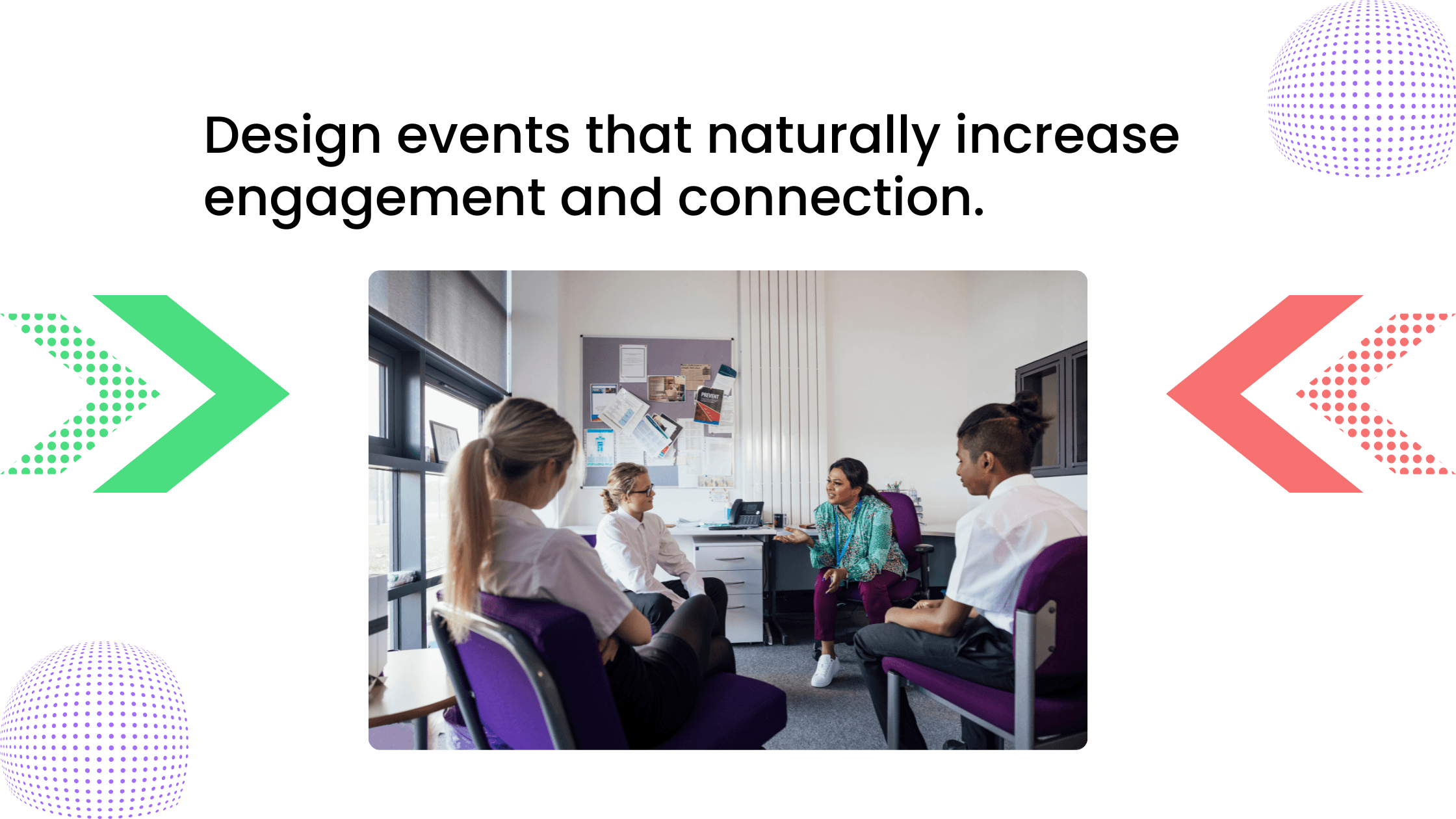
Hosting events inside a community is not enough on its own. What matters more is how those events are designed.
Events work best when they are part of a larger participation system that keeps members interacting regularly. The Coaching Community Blueprint explains how rituals, discussions, and events together create a structured community experience.
Well-structured coaching community events create space for members to interact, share progress, and learn from each other. When events are thoughtfully planned, they strengthen relationships and naturally increase participation across the community.
The most effective events are simple, consistent, and centered around member interaction. Instead of feeling like another scheduled session, they create an environment where members actively contribute to the conversation and support each other’s growth.
Create Predictable Event Rhythms
Consistency plays a major role in participation. When events happen irregularly, members often forget about them or struggle to build a habit of attending. A predictable rhythm makes it easier for people to plan their time and participate regularly.
Some communities schedule weekly gatherings focused on implementation or discussion. Others prefer bi-weekly or monthly events that allow members to reflect on progress and reconnect with the group. Regardless of the exact frequency, the key is repetition. When members know an event will happen at a familiar time, it gradually becomes part of the natural rhythm of the community.
Predictable events also help maintain community engagement between coaching sessions. Instead of long periods of silence, members return to the community at regular intervals to interact with others and share updates.
Keep Events Interactive
Events that rely on long explanations or presentations rarely sustain engagement. When the format resembles a lecture, members tend to listen passively rather than participate actively.
Interactive events create a better atmosphere. Members are invited to contribute their experiences, ask questions, and respond to others. Discussions about what participants implemented during the week, reflections on recent challenges, or conversations about lessons learned all encourage meaningful interaction.
These moments of participation transform events into collaborative experiences rather than one-way communication. When members feel their voice matters, they are far more likely to remain engaged in the community.
Use Smaller Breakout Groups
Large calls can sometimes limit participation because only a few people feel comfortable speaking in front of the entire group. As communities grow, this dynamic can make discussions less personal and reduce the sense of connection between members.
Smaller breakout groups help solve this challenge. Dividing participants into groups of three to five people allows everyone to speak and share their perspective. Conversations often become more relaxed and open in these smaller settings.
Breakout discussions also allow members to build familiarity with each other over time. As participants interact regularly in smaller groups, relationships deepen and engagement across the community naturally increases.
Focus on Member Participation
One of the most important principles in designing successful community events is ensuring that members remain at the center of the conversation. When the coach dominates most of the discussion, events can start to resemble another coaching session rather than a shared experience.
Encouraging members to speak, ask questions, and share updates helps shift the dynamic. The coach can guide the conversation, introduce prompts, or facilitate discussions, but the value of the event comes from the interactions between participants.
When members actively contribute to the conversation, the event becomes a space for collaboration and peer learning. Over time, this environment strengthens relationships and makes participation feel like a natural part of the community experience rather than an obligation.
Common Mistakes With Coaching Community Events
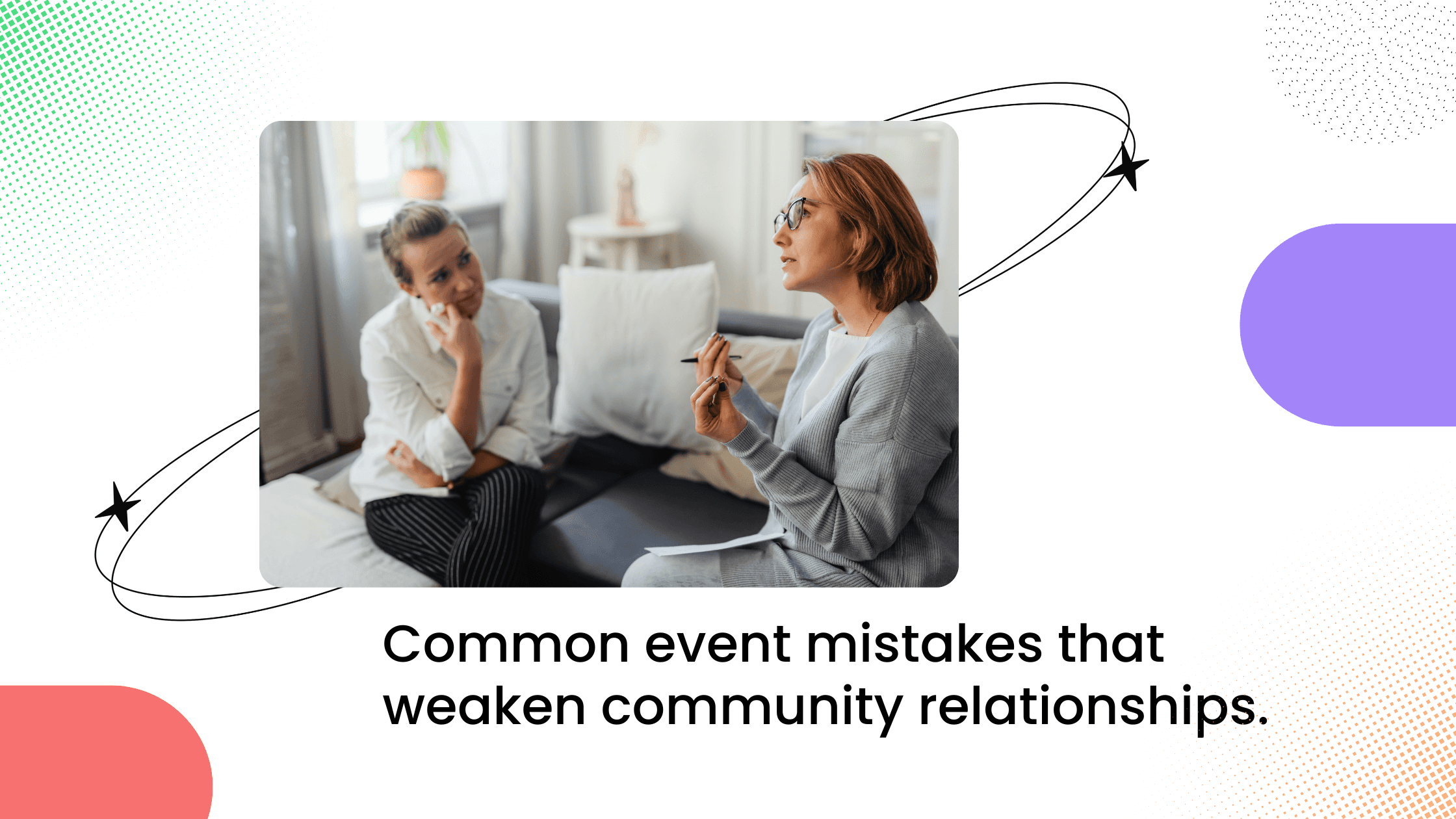
Well-designed community engagement events can strengthen relationships and keep members connected between coaching sessions. However, when events are planned without a clear structure, they can quickly lose their impact. Instead of increasing participation, poorly designed events may lead to lower attendance and weaker engagement across the community.
Many coaching communities encounter similar challenges when introducing events. Understanding these common mistakes can help coaches create gatherings that truly support interaction, learning, and connection among members.
Events Without Interaction
One of the most frequent issues with coaching community events is a lack of interaction. When an event turns into a long presentation or lecture, members naturally shift into passive listening. While information may still be useful, the event no longer creates the shared experience that helps relationships grow.
Strong community events invite participation. Members should have opportunities to speak, share their experiences, or reflect on what they are learning. When participants actively contribute to the conversation, the event becomes a collaborative space rather than a one-directional session.
Events Run Only by the Coach
Another common mistake is when the coach carries the entire event. The coach introduces topics, answers questions, and leads every discussion while members remain mostly silent. Over time, this dynamic can make events feel similar to regular coaching sessions.
Community events work best when members are involved in shaping the conversation. Encouraging participants to share their progress, discuss challenges, or respond to each other’s experiences allows the community itself to become an active part of the learning process.
Too Many Events
While events can strengthen engagement, scheduling too many gatherings can have the opposite effect. When communities host frequent sessions without a clear rhythm, members may begin to feel overwhelmed. Attendance drops because participants struggle to keep up with the schedule.
A smaller number of well-designed events often works better than a crowded calendar. When events happen at predictable intervals, members can plan for them and participate more consistently.
No Clear Purpose
Every community event should have a clear intention. Without a defined purpose, gatherings may feel unstructured or confusing for participants. Members might attend once but hesitate to return if they are unsure what value the event provides.
Successful community engagement events usually focus on a specific outcome, such as sharing implementation progress, reflecting on recent challenges, or celebrating milestones within the program. When the purpose is clear, members understand why the event matters and are more likely to participate actively.
Avoiding these common mistakes allows coaching communities to design events that genuinely strengthen relationships. When gatherings encourage interaction, maintain a manageable rhythm, and serve a clear purpose, they become a powerful part of the community experience.
FAQs About Coaching Community Events
What are coaching community engagement events?
Community engagement events are gatherings designed to bring members of a community together to interact, share experiences, and participate in meaningful activities. In coaching environments, these events create opportunities for members to connect beyond scheduled sessions. Instead of learning only from the coach, participants engage with each other through discussions, reflections, and collaborative activities that strengthen relationships within the community and improve the overall impact of the coaching program.
How do events improve community engagement?
Events improve community engagement by creating shared experiences. When members participate in activities together, they interact more naturally and become familiar with each other’s goals, challenges, and progress. These shared moments make participation visible and encourage conversation, which gradually strengthens relationships and keeps the community active between coaching sessions.
What events work best for coaching communities?
Events that encourage interaction tend to work best for coaching communities. Many effective formats fall under group coaching activities, such as implementation discussions, peer mastermind sessions, reflection circles, and accountability check-ins. These types of events invite members to share progress and support each other, which strengthens both engagement and relationships within the group.
How often should coaching communities run events?
There is no hard rule. The most effective coaching communities usually follow a predictable rhythm. Some events happen weekly to maintain regular interaction, while others take place monthly to celebrate milestones or reflect on progress. Consistent scheduling helps members build a habit of participating and makes events feel like a natural part of the community experience.
Final Takeaway - Events Turn Communities Into Relationships
Content helps members learn new ideas. But learning alone rarely creates strong communities.
Content shares knowledge. Events create experiences. Experiences build relationships.
When members regularly interact through shared activities and conversations, the community becomes more than a place for information. It becomes an environment where people support each other’s progress and grow together.
Strong coaching communities develop when members connect not only with the coach but also with each other. Events play an important role in making those connections possible.
If you want stronger relationships inside your coaching program, create a space where members can meet, interact, and grow together. Wylo helps you do just that.
Start your coaching community with Wylo and build an environment where engagement continues beyond coaching sessions.

Senthil
Marketing Head of Wylo, a highly comprehensive and customizable community platform for coaches, brands, and creators. Senthil helps coaches design clear marketing systems, strong positioning, and sustainable monetization models through practical community frameworks and execution-first strategy.