Coaching community
How to Host Challenges in a Coaching Community That Drive Real Results
Challenges are an effective tool for coaches to spark engagement, attract members & display learnings. This guide walks you through how to plan, run & follow up on a community challenge that delivers real results.

Contents
If you’re looking to host challenges for a coaching community, this guide is not about hype, templates, or “30-day challenge ideas.” It’s about execution that actually works inside a community context.
Most online coaching challenges create a brief spike of activity, then everything returns to silence. Engagement fades, momentum resets, and coaches are left wondering why the effort didn’t compound.
That happens because challenges are often treated like campaigns: launch, push, finish, move on. In a community, that approach breaks momentum instead of building it.
Coaching community challenges only work when they’re designed as part of a system, one that activates members, creates participation habits, and feeds long-term growth rather than burning energy for temporary excitement.
This system-level approach is part of a broader growth framework we break down in How to Grow Your Coaching Business with Online Communities.
This guide shows you how to design and host challenges that:
Activate members instead of entertaining them
Create participation, not passive consumption
Build momentum that continues once the challenge ends
No ideas dump. No fluff. Just the mechanics that make challenges work inside a coaching community, especially if your goal is engagement, retention, and sustainable growth.
TL;DR
Most online coaching challenges fail because they’re run like short-term campaigns, not participation systems.
A challenge should activate behavior, not just deliver tasks or content.
Challenges work best when they create daily participation habits, not one-time excitement.
The real goal isn’t completion, it’s momentum that carries back into the community.
Well-designed coaching community challenges increase engagement, retention, and conversion while they feed a larger community system instead of standing alone.
Why Challenges Work So Well Inside Coaching Communities
Challenges are one of the most effective formats in challenge-based coaching, but only when they’re embedded inside a community. On their own, challenges create activity. Inside a community, they create momentum.
The difference matters for coaching community engagement. One produces short-term action. The other builds behavior that compounds among clients and cohorts.
Challenges Create Temporary Urgency
Challenges work because they compress time.
A clear start and end date:
removes procrastination
narrows focus to a single outcome
creates psychological permission to act now instead of “someday”
This is why people are far more likely to take action during a challenge than after consuming open-ended advice. Urgency lowers resistance.
But urgency alone doesn’t create retention.
When the challenge ends, so does the pressure to show up, unless there’s a structure to carry that energy forward.
Communities Provide Continuity
A coaching community solves what challenges lack: continuity.
Inside a community:
actions are visible
progress is shared
conversations don’t reset to zero when the challenge ends
Instead of asking participants to restart motivation every time, the community preserves context. The challenge becomes the entry point, not the entire experience.
This is why challenges often fail outside communities but compound inside them. Without a shared environment, momentum has nowhere to live.
Why Challenges Fail Outside Communities but Compound Inside Them
Standalone challenges usually produce the same outcome:
high sign-ups
a spike in activity
a sharp drop-off afterward
The failure is less about execution and more about the isolated environment.
When challenges run without a community:
accountability is private
learning happens in silos
progress disappears once the timeline ends
Inside a community, the opposite happens. Participation is public. Progress reinforces participation. Momentum carries forward.
That’s the structural difference.
Challenges Create Action, Not Just Motivation
Challenges inspire people. Most importantly, they work because they remove ambiguity.
Time-bound structure drives behavior by:
telling members exactly what to do today
limiting choices to a single action
reducing decision fatigue
“Do this today” beats open-ended advice every time. Coaching clients don’t stall because they lack motivation. They stall because there are too many options.
Challenges narrow the path. This is why challenge-based coaching consistently outperforms content-based coaching when the goal is behavior change, not just understanding.
Communities Turn Challenges into Habit Loops
Challenges alone create action. Communities turn that action into a habit.
Here’s how the loop forms:
A challenge prompts a specific action
Members share progress publicly
Visibility creates accountability
Accountability leads to consistency
Consistency turns into momentum
This loop is what drives sustained coaching community engagement.
Without a community, the loop breaks after the challenge ends. With a community, each challenge strengthens the system. Members who act once are far more likely to act again.
That’s why high-performing coaching communities don’t treat challenges as campaigns. They treat them as activation engines, designed to create habits that outlast the challenge itself.
This habit-driven approach is what separates communities that grow sustainably from those that spike and stall.
Where Most Coaching Community Challenges Break
Most coaching community challenges don’t fail because the idea was weak or the coach didn’t show up. They fail because the structure was never designed to support participation beyond the initial spike.
These breakdowns are predictable. And if your goal is to grow a coaching community, here are the exact failure points you need to avoid.
Treating Challenges Like Content Drops
One of the most common mistakes is designing challenges as a series of daily content releases.
Typical pattern:
Day 1: video or lesson
Day 2: another video
Day 3: more material
Members watch, nod, and move on
Daily videos do not equal participation. When a challenge is structured around consumption, members behave like consumers. They watch privately, fall behind quietly, and disengage without friction. Momentum dies because nothing requires public action.
“Consume + move on” trains passivity. And passivity is the fastest way to drain energy from a challenge.
High-performing challenges flip the focus:
content supports action
action happens publicly
participation, not completion, is the success metric
No Clear Participation Outcome
Another structural failure is running challenges without a defined behavioral outcome.
This shows up as:
prompts that ask for reflection but not action
tasks that are optional or loosely framed
vague goals like “show up” or “do your best.”
Without a clear participation outcome, members don’t know what success looks like.
Posting prompts alone doesn’t activate behavior. People need to know:
what to do,
where to do it
what “done” actually means
Vague challenges create hesitation. Hesitation turns into lurking. Lurking kills momentum.
Effective coaching community challenges define a visible action that members must take, one that others can respond to. When behavior is clear, participation rises naturally.
Challenges With No Next Activities
Many challenges perform well during the run, then collapse the moment they end. Day 7 or Day 21 arrives, the challenge closes, and engagement drops to zero.
The problem isn’t fatigue. It’s isolation. Challenges break when there’s no bridge into what comes next:
no transition into an ongoing membership
no follow-up ritual or cadence
no connection to events, cohorts, or deeper programs
Without the next activities, challenges become one-off experiences instead of growth mechanisms. In communities that scale, challenges are only entry points. They activate members, then guide them into:
ongoing participation
deeper commitment
the next layer of the community system - events, memberships, etc
If a challenge doesn’t lead somewhere, it doesn’t help you grow a coaching community. It just creates a temporary spike that disappears as fast as it arrived.
Avoid these three structural breaks, and challenges will stop feeling like short-lived campaigns. They start functioning as engines that activate members and feed long-term community growth.
In high-performing ecosystems, challenges usually flow into an ongoing structure like a membership, which we outline in Create a Paid Membership Community for Coaching Clients.
The Challenge-as-Activation Framework (Core Differentiator)
Most articles explain what coaching challenges are. Very few explain how challenges actually activate a coaching community instead of creating a short-lived spike.
To run an effective community, you need a system, not a set of ideas.
This is the Challenge-as-Activation Framework: a four-phase structure that turns challenges into participation engines instead of temporary moments. When applied correctly, this framework increases coaching community engagement, accelerates habit formation, and feeds long-term growth instead of resetting momentum during every challenge.
The 4 Phases of a High-Performing Coaching Community Challenge
Phase 1 - Entry & Context
Activation starts before Day 1.
Most challenges fail because people join without understanding what they’re stepping into. Entry & context eliminate that confusion.
This phase must clearly answer three questions:
Who it’s for
Participants should instantly recognize themselves. If the challenge feels generic, commitment stays shallow.
What outcome do they work toward
Not “learn something,” but a specific shift they’ll make by the end. Outcomes anchor effort.
What participation actually looks like
Where they’ll post. What they’ll share. How often they’ll show up. Ambiguity kills activation.
When entry is clear, participants arrive ready to act, not observe.
Phase 2 - Daily Participation Trigger
Challenges work because they remove choice.
Each day must revolve around one clear action, not a lesson, reflection, or checklist.
A strong daily trigger is:
Low effort → easy to start
High visibility → done publicly
Unambiguous → obvious when complete
This is where most online coaching challenges go wrong. They overload participants with tasks or content, which increases friction instead of momentum.
One action per day keeps participation consistent and predictable, the foundation of coaching community engagement.
Phase 3 - Peer Reinforcement
Completion doesn’t create momentum. Interaction does. If the only response participants receive is from the coach, the challenge stays coach-centric and fragile.
High-performing challenges are designed so that:
members’ responses are as important as coach’s replies
participation triggers interaction
insight comes from multiple perspectives
Peer reinforcement creates:
faster feedback loops
social accountability
visible proof that participation works
This is the moment a challenge stops being a task and starts becoming a community experience.
Phase 4 - Transition, Not End
Most challenges die because they end. A high-performing challenge transitions.
Instead of asking, “Did you enjoy the challenge?” the close should answer:
What happens now?
Where does this momentum go?
How do participants keep progressing together?
Effective transitions might guide members into:
an ongoing membership
a recurring ritual
a deeper program or cohort
or the next participation loop inside the community
When challenges are framed as entry points, engagement doesn’t collapse. It compounds.
Why This Framework Works
This framework aligns challenges with how communities actually grow:
clarity before action
participation before motivation
interaction before retention
transition before monetization.
That’s why challenges built this way don’t just run well; they activate members, strengthen habits, and support long-term community growth.
Used correctly, challenges stop being campaigns and start becoming the most reliable activation mechanism inside a coaching community.
Designing Challenges That Drive Engagement (Not Burnout)
Many community challenges for coaches fail not because the idea was weak, but because the execution demands too much effort from both members and the coach. High engagement doesn’t come from intensity. It comes from repeatable participation.
If your goal is coaching community engagement, challenges must be designed to reduce friction, not increase pressure. The difference between a challenge that energizes a community and one that burns it out is structure.
One Action Per Day Beats Complex Tasks
Simplicity is not a compromise. It’s a performance multiplier.
Challenges that ask members to:
complete multi-step tasks
watch long videos
or “do this when you have time”
create hesitation. Hesitation kills momentum.
One clear action per day works because:
members know exactly what to do
effort stays predictable
participation feels achievable even on busy days
Low-friction actions increase completion rates, which in turn increase visibility and interaction. Consistent participation matters far more than ambitious tasks that only a few finish.
Small Progress Is More Important Than Huge Tasks
Challenges don’t succeed because tasks are hard. They succeed because progress is seen.
Public participation creates:
accountability without pressure
social proof that others are showing up
momentum that pulls in hesitant members
Private wins don’t compound, unlike public progress.
In strong coaching community challenges:
progress is shared openly
responses trigger more responses
effort feels rewarded immediately
Engagement matters more than “perfect results” because engagement is what builds habit. Habit is what sustains the community after the challenge ends.
Coach as Guide, Not Enforcer
One of the fastest ways to burn out is designing challenges that depend on constant coach intervention.
If the challenge only works when you:
chase participation
reply to every update
or personally motivate members,
It’s not scalable. High-performing challenges position the coach as a guide, not an enforcer:
structure prompts action
system encourages interaction
members reinforce each other
Your role becomes:
highlighting patterns
amplifying good contributions
nudging momentum when needed
When the system does the heavy lifting, engagement becomes sustainable. Challenges stop feeling exhausting and start feeling energizing, for both you and your community members.
The Core Principle to Remember
Design challenges so participation is easier than opting out.
When actions are simple, progress is visible, and interaction doesn’t rely on your constant energy, challenges become one of the most reliable tools for driving coaching community engagement without burnout.

How Challenges Feed Community Growth (Without Selling)
Well-designed challenges don’t grow a community by pitching offers. They grow it by changing behavior. When participation increases, momentum follows, and growth becomes a byproduct, not a push.
If your goal is to grow a coaching community, challenges act as the connective tissue between day-to-day engagement and long-term commitment. They create movement inside the system without introducing friction or sales pressure.
Challenges as Entry Points
Challenges are one of the lowest-friction ways for someone to experience a community.
They work as entry points because:
participation is time-bound
expectations are clear
commitment feels temporary, not permanent
For new or hesitant members, this lowers resistance. Instead of asking them to join something, you’re inviting them to do something. Action builds familiarity faster than explanations ever will.
Inside a community, challenges help new members:
understand how participation works
see others engaging publicly
experience momentum before deciding to go deeper
This is why challenges are effective at warming people up without selling anything.
Challenges as Re-Activation Tools
Every community accumulates dormant members over time. This is normal.
Challenges also work as reactivation tools because they:
introduce a fresh reason to show up
reset attention without requiring long-term commitment
create visible activity that signals the community is alive
Unlike announcements or reminders, challenges give inactive members a specific moment to re-enter. The time-bound nature removes the pressure of “catching up” and replaces it with a clean restart.
When reactivation works, momentum spreads:
one response triggers others
silence breaks quickly
participation patterns reset
This is how challenges help grow a coaching community from within, not just by adding new people.
Challenges as Segmentation Signals
Challenges don’t just drive engagement. They reveal intent.
By observing how members participate, you can clearly see:
who shows up consistently
who engages publicly
who supports others
who completes actions without prompting
This creates natural segmentation without surveys or assumptions.
Challenges help you identify:
highly engaged members who benefit most from deeper involvement
casual participants who need lighter touchpoints
members who are ready for the next level of commitment
This insight is critical for growth because it shows where energy already exists. Future programs, memberships, or advanced offers don’t need persuasion when they align with demonstrated behavior.
These participation signals are the same indicators used to convert engaged members into paying ones, which we break down step by step in How to Convert Your Audience into Paying Community Members
Why This Matters for Sustainable Coaching Business Growth
Challenges feed growth by aligning three things:
participation
visibility
and momentum
They warm up new members, re-engage existing ones, and surface signals about readiness, all without selling or pushing upgrades. When growth is driven by behavior instead of promotion, it’s more stable and far more scalable.
This is why challenges are not just engagement tools. They’re growth mechanisms built into the community system itself.
When (and When Not) to Monetize a Coaching Challenge
Monetizing a challenge is less about pricing strategy and more about timing. Most challenges don’t fail because they’re free or paid. They fail because monetization is introduced without understanding what role the challenge plays inside the community system.
Handled correctly, challenges can support revenue without feeling salesy. If done poorly, they interrupt momentum and weaken trust.
Free Challenges That Lead Somewhere
Free challenges work best when they are designed as activation tools, not standalone events. Free makes sense when:
the goal is participation, not revenue
members are new or lightly engaged
the community needs momentum or reactivation
In these cases, charging would add friction before behavior has formed.
However, free only works if the challenge leads somewhere. That “somewhere” must already exist.
After a free challenge, there should be:
a clear next environment where participation continues
visible continuity of discussion or progress
a natural way for engaged members to stay involved
Without this, free challenges create energy that collapses as soon as the challenge ends. Engagement spikes, then disappears, leaving no long-term impact on community growth.
Free challenges are not a growth strategy on their own. They are effective only when they are the front door to an existing system.
Paid Challenges Inside Communities
Paid challenges work when payment reinforces commitment, not when it’s used to force engagement.
Charging makes sense when:
the community already has active participation
members understand how to engage and why it matters
the challenge supports a clear, shared outcome
In this context, payment doesn’t just create value. It stabilizes the whole coaching system.
Members who pay for a challenge inside an active community:
show up more consistently
complete actions more reliably
engage more publicly
That’s not because money motivates them. It’s because they’ve already experienced the system working and payment signals their intent to take it seriously.
Paid challenges struggle when:
participation habits don’t exist yet
the challenge is the first interaction members have
there’s no shared context or peer visibility
In those cases, charging raises expectations without giving members the structure they need to succeed.
The Monetization Rule That Keeps Challenges Healthy
Challenges should never exist just to generate revenue.
They work best when monetization follows this sequence:
Participation is normal
Engagement is visible
Progress is happening publicly
Payment reinforces commitment
If any of these are missing, monetization weakens the challenge instead of strengthening it.
This is why many high-performing communities use challenges as activation and engagement engines first, and only layer monetization once behavior is already in place. When timing is right, charging feels natural.
The goal is not to monetize every challenge. It’s to ensure every challenge strengthens the community system rather than breaking it.
Sustainable coaching business revenue models must sit on top of engagement, not attempt to replace it. The top five ways to monetize your coaching community typically include memberships, cohort programs, challenges, events, and hybrid structures - each effective only when layered onto an already active, value-driven ecosystem. Monetization works best as an extension of participation, not a substitute for it.
Common Mistakes Coaches Make With Community Challenges

Challenges are one of the most effective tools for coaching community engagement, but only when they’re designed for participation, not performance. Most challenges that underperform don’t fail because the idea was weak. They fail because the structure pushes members in the wrong direction.
Below are the most common mistakes coaches make with coaching community challenges, and why each one quietly limits growth instead of driving it.
Over-Engineering the Coaching Challenge
A frequent mistake is trying to make the challenge too valuable.
This usually shows up as:
complex daily tasks
long instructions or videos
multiple actions per day
detailed tracking or scoring systems
While this looks impressive on paper, it creates friction in practice.
High-performing community challenges for coaches work because they reduce decision fatigue. Members should never wonder what to do today. When a challenge feels heavy, participation drops first, and momentum follows.
Simple, repeatable actions outperform complex tasks every time. One clear action per day creates far more engagement than a perfectly designed but demanding plan.
Treating Completion as the Goal
Another common mistake is optimizing for completion instead of participation.
Many challenges are framed around:
finishing all days
checking off tasks
“winning” the challenge
This turns the experience into a private race instead of a shared process.
In a coaching community, the real value is not who finishes, it’s what becomes visible along the way. When members post updates, reflect publicly, and respond to each other, learning compounds across the group.
Completion without interaction creates silent success. Silent success doesn’t strengthen a community, build identity, and support long-term engagement.
Completion is the goal but participation is the pathway.
Ending Without Direction
The final mistake happens at the moment most coaches stop paying attention: the end.
Many challenges end with:
a simple “well done” message
a recap post
or nothing at all
When a challenge ends without direction, momentum collapses. Members who were active suddenly lose context. Engagement drops because there’s no clear “what next.”
Strong challenges close with a seamless transition.
That transition should:
acknowledge participation publicly
reinforce shared progress
point members toward the next environment where engagement continues
Without this bridge, even a successful challenge becomes a dead end. With it, the challenge feeds directly into retention, deeper engagement, or the next stage of community growth.
The Pattern Behind These Mistakes
Each of these mistakes has the same root cause: designing challenges as isolated events instead of community systems.
Over-engineering focuses on tasks. Completion focuses on outcomes. Ending without direction ignores continuity.
High-performing coaching community challenges do the opposite:
they simplify action
prioritize visibility and interaction
intentionally extend momentum beyond the challenge window
Avoiding these mistakes doesn’t require more effort or better ideas. It requires designing challenges that strengthen participation habits instead of interrupting them.
When challenges reinforce how the community works, they stop being events and start becoming growth engines.
FAQs about Coaching Community Challenges
What is a coaching community challenge?
A coaching community challenge is a time-bound, participation-driven experience designed to activate members inside a community. Unlike standalone online coaching challenges that focus on content or completion, community challenges are built around visible action, peer interaction, and shared momentum. The goal is not just to finish tasks, but to change behavior and strengthen engagement inside the community.
How long should a coaching challenge run?
Most effective coaching community challenges run between 5 and 14 days. Shorter challenges reduce friction and increase completion, while still creating enough repetition for habits to form. Longer challenges often lose momentum unless they’re broken into clear phases with recurring participation triggers.
Duration matters less than structure. A short challenge with daily visible action will outperform a longer challenge built around passive consumption.
Are online coaching challenges still effective?
Yes, online coaching challenges are still effective when they’re designed as activation tools, not campaigns. Challenges fail when they rely on motivation alone or end without continuity. Inside a well-structured community, challenges remain one of the fastest ways to spark participation, rebuild momentum, and help members experience progress together.
Their effectiveness depends on what happens after the challenge, not just during it.
Can challenges help grow a paid community?
Challenges can help grow a paid community when they create commitment before monetization. Participation reveals who shows up, who engages deeply, and who benefits from shared progress. That behavioral signal is far stronger than interest or clicks.
This is why challenges work best as entry points or re-activation layers. When members experience value through participation, joining or staying in a paid community feels like a natural next step, not a sales decision.
Final Takeaway - Challenges Are Participation Engines
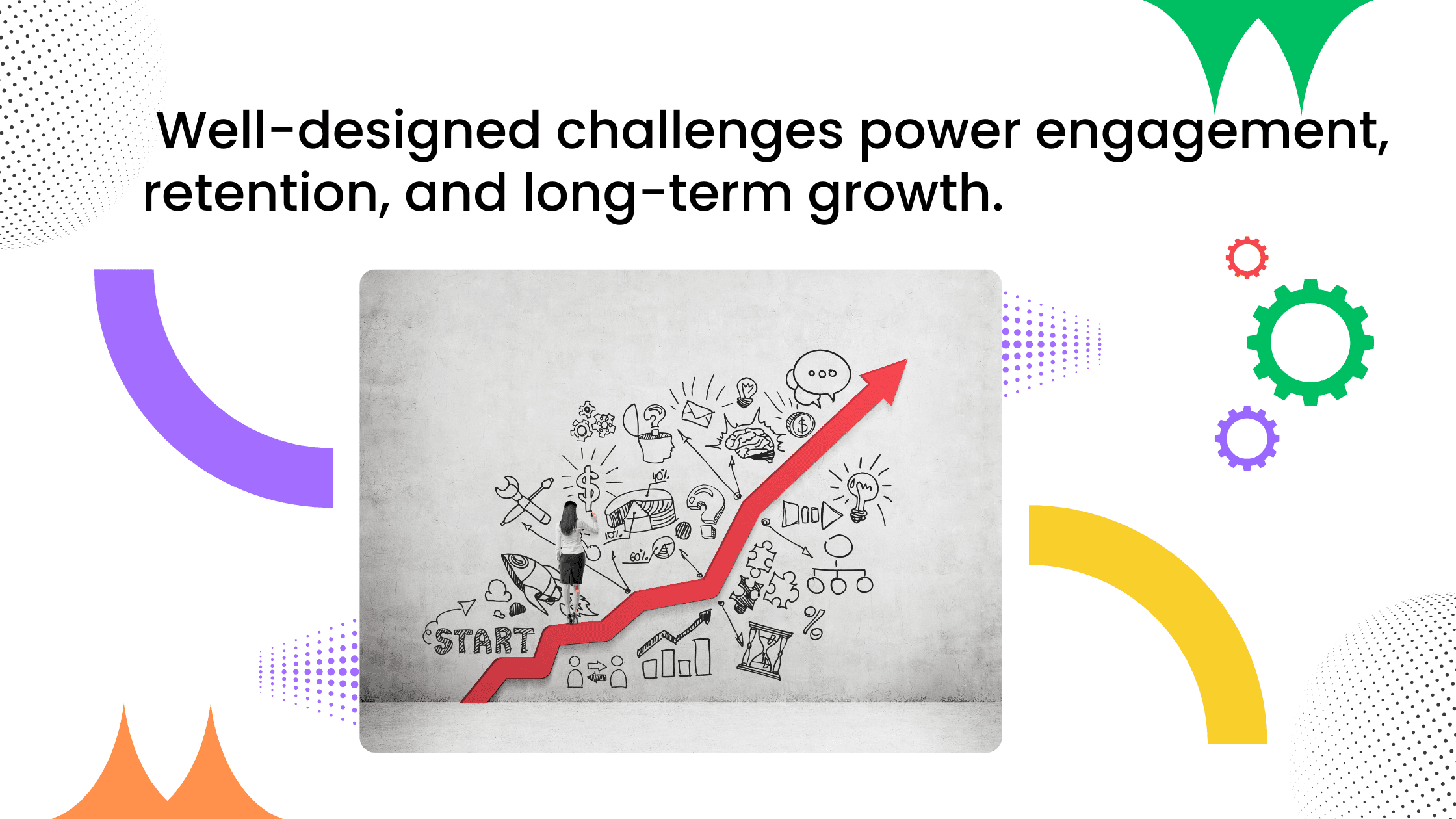
Challenges don’t grow communities by themselves. They don’t create scale. They don’t guarantee retention. What challenges do exceptionally well is activate behavior. Inside a coaching community, challenges work because they:
create urgency without pressure
lower the barrier to participation
make progress visible
and re-establish momentum quickly
Growth comes from what happens after the challenge:
whether participation continues,
whether peer interaction persists,
whether members know where to engage next.
Used correctly, challenges are not events. They’re participation engines that strengthen the coaching system you’re building.
Many coaches test these principles inside a small, private community before scaling further, using challenges as a low-risk way to observe behavior, refine structure, and build engagement loops.
If you’re experimenting with challenge-based engagement and want an environment designed for participation, continuity, and member-to-member interaction (not just content hosting), you can start a free trial with Wylo and use it as a sandbox to run your first few challenges intentionally.
The challenge itself matters less than the system it feeds.

Senthil
Marketing Head of Wylo, a highly comprehensive and customizable community platform for coaches, brands, and creators. Senthil helps coaches design clear marketing systems, strong positioning, and sustainable monetization models through practical community frameworks and execution-first strategy.