Coaching community
How to Host Events & Sessions in Your Coaching Community to Drive Engagement and Long-Term Retention
Hosting events in a coaching community is about designing sessions that reinforce participation before, during, and after. This guide shows you how to build a ritualized event system that reduces load on coaches while sustaining community momentum.

Contents
If you’re figuring out how to host events & sessions for your coaching community, this guide is about execution, not ideas, hype, or “run more lives.”
Most coaching community events look successful on the surface: people attend, questions get answered, the session ends. But a week later, engagement drops back to baseline. Nothing compounds.
That happens because events are treated like calendar items instead of systems.
Random live calls don’t build habits. One-off workshops don’t strengthen participation. And stacking more sessions often increases coach fatigue without increasing community momentum.
This guide reframes live sessions for online coaching communities as engagement accelerators and trust builders, when they’re designed to reinforce participation before, during, and after the session. You’ll learn how to run events that create continuity, reduce your load over time, and actually move the community forward.
If you want the full growth context, this fits inside the larger system explained in How to Grow Your Coaching Business with Online Communities, where events, challenges, and memberships work together as a single engagement engine.
TL;DR (What Actually Makes Community Events Work)
Standalone events don’t grow communities, ritualized events do
Live sessions work when they reinforce participation habits, not just deliver answers
The real value of events happens before and after, not only when the events happen
Cadence beats frequency, fewer, predictable sessions outperform random ones
Well-designed events reduce coach load over time, instead of increasing it
If your events feel busy but don’t move engagement, retention, or momentum, the problem isn’t attendance. It’s structure.
Why Live Events Matter in Coaching Communities
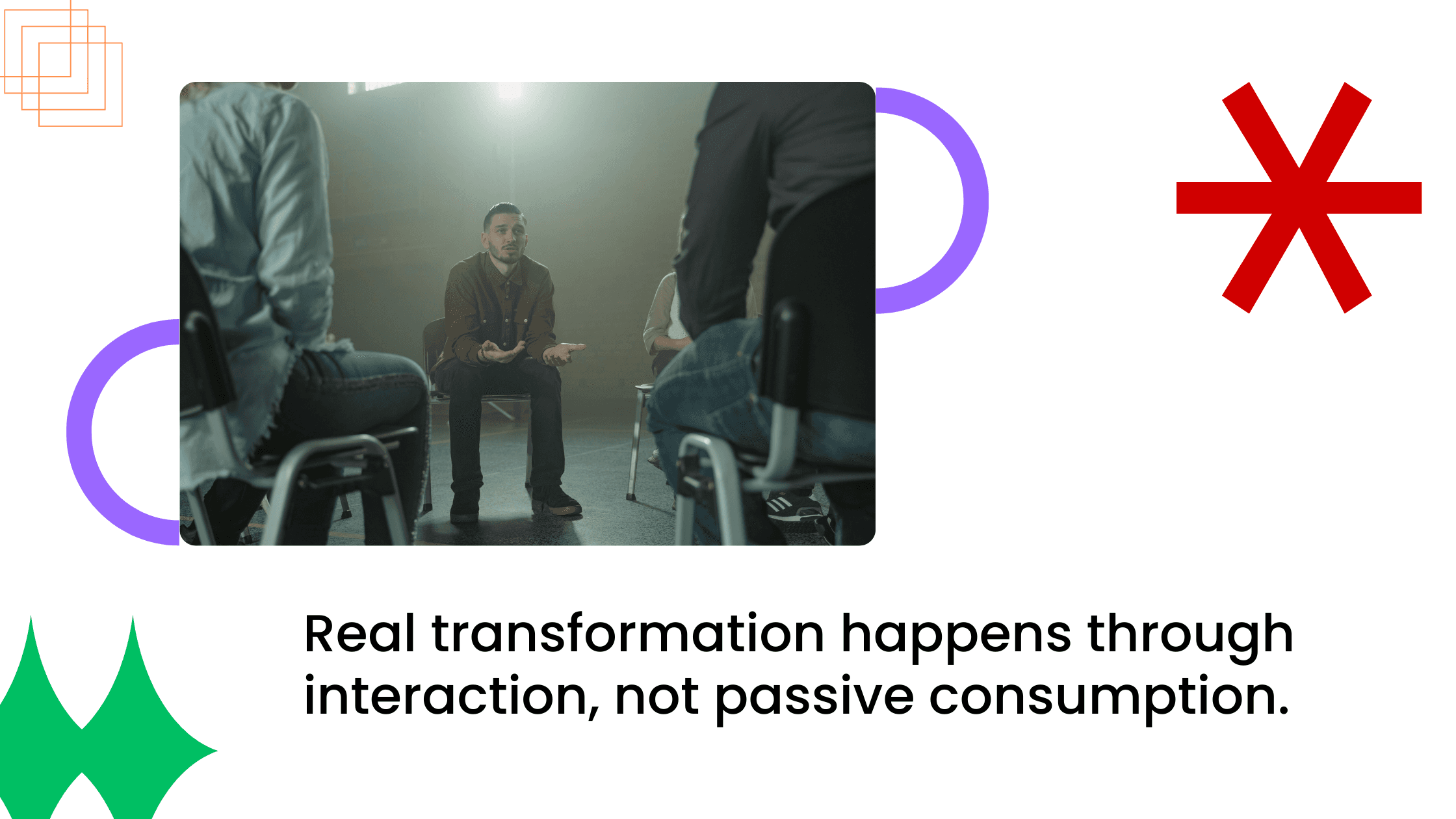
Many coaches ask, are live coaching sessions worth it, especially when async content feels more scalable. The short answer: yes, but not for the reasons most people think.
Live events don’t matter because they deliver information. They matter because they change how members experience your coaching community. Growth stalls when interaction becomes optional, invisible, or purely asynchronous in a coaching community. Live sessions reintroduce immediacy, clarity, and human presence, all of which accelerate engagement and retention when used intentionally.
The mistake is doing standalone events or treating events as “extra value.” Their real role is structural.
Why Async Alone Eventually Stalls Engagement
Async content is efficient, but it has a ceiling. When a community relies only on:
posts
recordings
written replies
Members start consuming privately. Participation drops because there’s no urgency to respond now. Questions linger. Feedback loops slow down. Over time, even high-quality async communities feel quiet.
Live sessions break that stall. They create moments where:
attention is focused
responses are immediate
participation is time-bound
That shift from “I’ll check this later” to “I should show up” is what reactivates momentum.
Live Sessions Accelerate Trust, Not Just Learning
Trust forms faster in real time than in text. Seeing the coach think, respond, clarify, and adapt builds confidence that can take weeks to establish asynchronously. For members, live interaction reduces uncertainty, not just about the material, but about whether the coaching community is worth investing in emotionally.
This is why live sessions matter more for member retention than content depth. Members don’t stay because they received answers. They stay because they feel supported in the moment they need it.
Events Are Retention Anchors, Not Content Delivery Engines
High-performing coaching communities don’t use events to “teach more.” They use them to anchor retention.
Events work when they:
give members a reason to return regularly
create predictable moments of connection
reinforce the habit of showing up
A single live session won’t change retention. A consistent rhythm of meaningful sessions will. That’s why cadence matters more than duration or production quality in coaching events.
Live Interaction Solves the “Invisible Coach” Problem
One of the fastest ways engagement erodes is when the coach becomes invisible. Not absent, invisible.
When members only see pre-recorded content or delayed replies, the relationship starts to feel transactional. Live interaction reverses that instantly. It reminds members there’s a real person guiding the space, not just a platform hosting content.
In real-time sessions:
questions get acknowledged
nuance is handled live
members feel seen, not just subscribed
That visibility builds trust faster than any welcome post or resource library ever could.
Events Create Shared Moments (Identity, Not Information)
Communities don’t grow through information. They grow through shared experiences. Live events create moments that members reference later:
“Remember when we talked about this…”
“That session changed how I approached…”
“What you said on that call helped me…”
Those shared moments build identity. They turn individual members into a collective. This is something replay libraries can’t replace.
Recordings are useful. But presence is transformative. When members attend, react, and reflect together, the community stops feeling like a resource hub and starts feeling like a place they belong. That sense of belonging is what sustains engagement long after the event ends.
Used this way, live events aren’t optional extras. They’re one of the strongest structural tools for keeping your coaching community active, connected, and worth staying in.
Types of Events That Actually Work in Coaching Communities
When coaches look for the best events to host within their coaching communities, most articles focus on formats, not outcomes. What truly matters isn’t the event type but the behavior the event reinforces inside the community.
The most effective coaching community events share three traits:
encourage participation, not passive listening
scale insight beyond the individual
fit into a predictable rhythm
Below are the types of live coaching sessions that consistently work when the goal is engagement, retention, and long-term momentum, not just attendance.
Group Coaching Calls (Progress + Accountability)
Group coaching calls work because they turn individual progress into shared learning.
Instead of repeating the same guidance across multiple 1:1 sessions, the coach addresses real challenges in a group setting. Everyone learns from one conversation, not just the person asking the question.
What makes them effective:
Structured hot seats keep the session focused and fair
Visible progress builds accountability without pressure
Collective insight reduces 1:1 fatigue while increasing impact
These calls work best when there’s a clear structure, who gets time, how questions are framed, and what members are expected to take away. Without structure, they drift. With it, they become one of the most reliable engagement anchors in a coaching community.
Live Q&A Sessions (Trust + Objection Removal)
Live Q&A sessions are not about teaching. They’re about clarity.
Members usually don’t leave coaching communities because they lack information. They leave because small uncertainties pile up. Q&A sessions surface those doubts and resolve them in real time.
Why they work:
Clarify stuck points before they become disengagement
Lower resistance to taking action
Reset momentum when participation dips
The key is focus. Effective Q&A sessions collect questions in advance, group similar themes, and prioritize clarity over coverage. When done well, they increase trust far more than another training session would.
Workshops & Deep-Dive Sessions (Skill Building)
Workshops are for transformation, not touchpoints.
They work best when there’s a clear outcome members can work toward in a single session or short series. Unlike group calls or Q&As, workshops demand more cognitive effort, which is why they should be used selectively.
Best practices:
Design for one specific skill or outcome
Tie the session to an application inside the community
Use them occasionally, not daily or even weekly
Overusing workshops increases fatigue. Used intentionally, they create high-impact moments that members remember and reference long after the session ends.
Community AMAs / Open Forums (Belonging)
AMAs and open forums shift the spotlight away from the coach. These sessions work because they’re member-driven. The agenda comes from what the community wants to discuss, not what the coach planned to deliver.
Why they matter:
Members feel heard, not managed
Peer voices become more confident and visible
The community feels less hierarchical
Open forums are especially powerful in mature communities where members already trust each other. They reinforce belonging and signal that the space isn’t just about instruction, it’s about shared ownership.
Guest Sessions & Collaborations (Fresh Energy)
Guest sessions bring novelty, but novelty alone doesn’t sustain engagement. Their value comes from:
fresh perspectives that challenge assumptions
cross-pollination of ideas and audiences
re-energizing existing members
The mistake is overuse. When guest sessions become frequent, they dilute the community’s core identity. Used sparingly, they add contrast and energy without disrupting rhythm.
How to Choose the Right Event Mix
There’s no single best format. High-performing coaching communities combine these event types intentionally:
Group calls for progress
Q&As for clarity
Workshops for depth
AMAs for belonging
Guest sessions for energy
The goal isn’t variety for its own sake. It’s reinforcing participation in different ways while maintaining a rhythm members can rely on. When event types align with the role they’re meant to play, live sessions stop feeling random and start compounding engagement over time.
Events vs Content - Why Most Communities Get This Wrong

One of the biggest reasons coaching community events underperform is simple: they’re treated like content.
Slides are prepared. Talking points are polished. A link is shared. People attend, listen quietly, and leave. On paper, it looks successful. In reality, nothing compounds.
Communities don’t grow through information delivery. They grow through participation. When events are designed like webinars, they inherit all the same problems webinars have: passive attention, low emotional investment, and zero habit formation.
Events Are Participation Catalysts, Not Content Drops
The most common mistake is assuming that attendance equals engagement. It doesn’t. Attendance tells you someone showed up. Engagement tells you someone did something.
Here’s where most communities go wrong:
Events are optimized for presenting, not interacting
Members are positioned as listeners, not contributors
Success is measured by views or replays, not behavior
When events function as content drops, members behave like an audience. They consume, disengage, and move on. Nothing carries forward into the community.
High-performing communities flip this entirely.
They treat events as participation catalysts:
The session creates prompts for discussion during and after events
Members are expected to respond, share, or apply something publicly
Interaction is built into the structure, not added at the end
This is why passive listening doesn’t build community, change behavior, or create visibility. And it doesn’t give members a reason to return once the session is over.
The real value of an event isn’t the content delivered in 60 minutes. It’s the participation it triggers in the days that follow. When events are designed around that principle, engagement stops being accidental and starts becoming repeatable.
This is the same reason challenges outperform content drops when designed correctly. Both formats can drive value, but challenges win when they trigger visible participation loops rather than passive consumption.
Understanding how to host challenges for a coaching community effectively means designing for action, accountability, public progress, and a defined end milestone. When members can see movement, their own and others’, engagement compounds, momentum builds quickly, and the energy becomes self-reinforcing instead of content-dependent.
The Event-as-Engagement Loop (Core Differentiator)
Most coaching communities judge events by attendance. High-performing communities judge them by what happens before and after.
This is the difference between isolated live sessions and coaching community events that actually compound. The shift comes from treating events as part of a loop, not a one-time calendar entry.
The Event-as-Engagement Loop has four stages:
Pre-event activation - members are primed to participate
Live participation - interaction is designed into the session
Post-event reflection - insights are made visible
Community continuation - momentum flows back into the space
When all four are present, events stop feeling draining and start driving engagement predictably.
Before the Event - Activation Beats Promotion
Most events are promoted. Very few are activated. Promotion asks people to attend. Activation asks them to prepare to participate. Before the session, members should be prompted with one simple, visible action related to the program:
a question they’ll reflect on
a challenge they’re currently stuck on
a situation they want feedback on
This does two things:
It primes members mentally for interaction
It lowers friction during the live session because people already know what they’ll contribute
When members arrive with context, participation feels natural instead of forced. The event starts before the calendar reminder ever fires.
During the Event - Design for Interaction
Engagement during live sessions doesn’t come from energy or charisma. It comes from structure. The fastest way to kill interaction is to treat events like presentations:
long slide decks
uninterrupted monologues
“questions at the end”
High-engagement sessions reverse this:
fewer slides, more prompts
shorter input blocks, more response windows
clear moments where members are expected to speak, share, or react
Structure does the heavy lifting. When interaction is designed in, members don’t need to be pushed to participate. They simply follow the flow.
This is why the best live sessions feel collaborative, not performative.
After the Event - Where Real Value Compounds
The most valuable part of an event often happens after it ends. If insights stay locked inside a recording, engagement resets. If insights are captured publicly, value compounds.
Post-event reflection should answer:
What stood out?
What changed in how members think or act?
What’s being applied next?
When members share these reflections inside the community:
learning becomes visible
peers learn from each other
the event continues to create value long after it’s over
This is where events stop being moments and start becoming multipliers.
Community Continuation - Turning Sessions into Momentum
Events shouldn’t close with “thanks for joining.” They should close with direction.
Strong continuation looks like:
a follow-up discussion thread tied to the session
a small action members take together afterward
a clear link between the event and the next participation moment
When events feed directly back into ongoing conversations, they strengthen habits instead of interrupting them.
That’s the Event-as-Engagement Loop in action: activation before, participation during, reflection after, and continuation inside the community.
When events are designed this way, engagement becomes predictable and your community grows stronger with every session, not just during them.
This continuation is easiest when events, discussions, and follow-ups live in the same space. Platforms built for community-led events (like Wylo) allow sessions to automatically flow into discussion threads, reflections, and next actions, instead of breaking momentum by sending members elsewhere.

How Often Should Coaches Host Live Sessions?
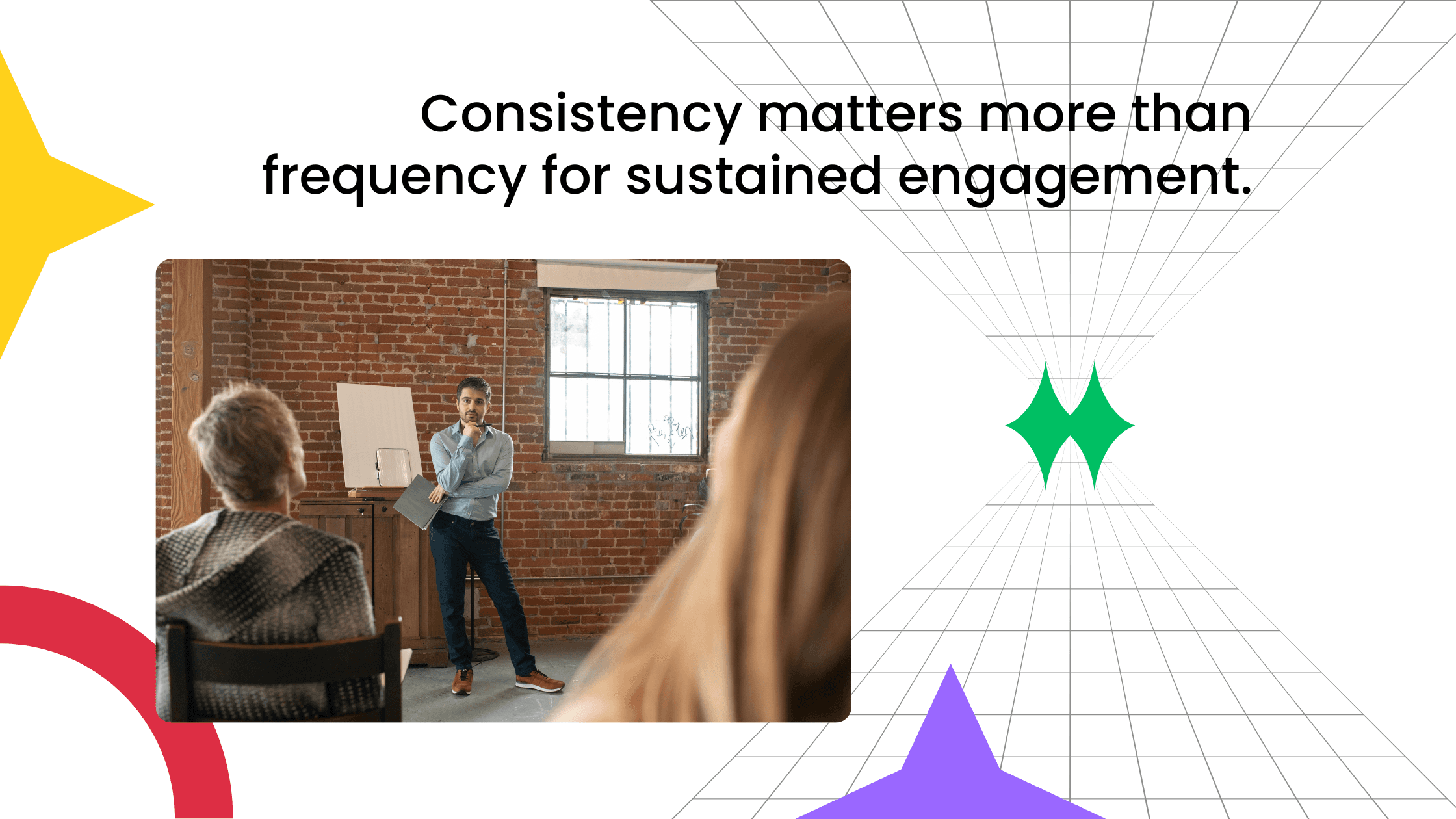
One of the most common questions coaches ask is how often should coaches host live sessions inside a community. The answer isn’t “as often as possible.” It’s “as often as the system can sustain.”
Live sessions work when they create rhythm. They fail when they depend on bursts of energy. Frequency only matters in relation to community size, engagement maturity, and the coach’s capacity.
Weekly vs Bi-Weekly vs Monthly - What Actually Works
There is no universal best cadence. What works depends on where your community is right now. Weekly sessions work best when:
the community is small and highly engaged
members are still forming participation habits
the coach is actively shaping behavior and norms
Weekly cadence creates fast feedback loops, but it also demands consistency. If sessions are skipped or rushed, trust erodes quickly. Bi-weekly sessions are ideal when:
the community has steady engagement between events
peer interaction is already happening
members don’t need constant live touchpoints to stay active
This cadence balances momentum with sustainability. Many mature coaching communities settle here because it keeps events special without creating pressure. Monthly sessions work when:
the community is large or highly self-driven
value flows primarily through member-to-member interaction
live sessions are used for alignment, reflection, or resets
Monthly events shouldn’t carry the full weight of engagement. They work best as anchors that reinforce what’s already happening inside the community. The mistake isn’t choosing the “wrong” frequency. It’s choosing a cadence that can’t be maintained consistently.
The Cadence Rule - Consistency Beats Frequency
Members don’t build habits around how often you host events. They build habits around knowing when something happens.
This is the cadence rule:
predictable beats frequent
reliable beats ambitious
rhythm beats intensity
A monthly session that never moves creates more engagement than weekly sessions that get postponed or canceled. When members can anticipate events, participation becomes part of their routine instead of a decision they need to reconsider each time.
Live sessions should feel like rituals, not surprises.
When cadence is stable:
attendance improves naturally
engagement feels expected, not forced
events integrate smoothly into the broader community system
If you’re unsure how often to host live sessions, start slower and stay consistent. You can always increase frequency. Rebuilding trust after broken cadence is much harder.
The right answer to how often should you host live sessions is the cadence you can protect long-term, without burnout, and without breaking the engagement loop you’re building inside your community.
Common Event Mistakes That Kill Engagement

Most coaching community events don’t fail because the coach lacked expertise or effort. They fail because the event was never designed to create participation before, during, and after the session.
These mistakes are subtle, but they compound quickly. And once engagement drops, it’s hard to recover momentum.
Hosting Without a Clear Outcome
The fastest way to dilute engagement is running events with no defined purpose.
This often shows up as:
“Let’s hop on a call and see what comes up”
open-ended sessions without a focus
vague promises like “value” or “connection”
Without a clear outcome, members don’t know why they should attend or how to participate. Attendance becomes optional. Interaction becomes hesitant. And the session feels disposable.
High-performing coaching community events always answer one question upfront: What will change for members by the end of this session?
When outcomes are clear:
participation feels safer
preparation improves
engagement rises naturally
An event doesn’t need to be complex. It needs to be intentional.
One-Way Teaching Sessions
Another common mistake is treating events like live content drops.
The pattern is familiar:
long explanations
slides or monologues
minimal interaction
members listening quietly with cameras off
These sessions may feel productive to the coach, but they don’t build a community. They train members to consume, not participate.
Lectures scale information. Communities grow interaction.
In high-engagement events:
members speak as much as the coach
questions spark discussion, not just answers
insight emerges from the group, not just the host
When events become one-way teaching sessions, engagement stalls and members stop showing up consistently.
No Post-Event Continuity
Engagement often dies the moment the call ends. This happens when:
the conversation isn’t continued inside the community
insights aren’t captured publicly
there’s no “what next” for participants
Without post-event continuity, each session exists in isolation. Momentum resets to zero every time.
Strong communities treat events as starting points, not endpoints. After the session:
key takeaways are shared in a discussion thread
members reflect or apply ideas publicly
the next participation loop is made obvious
When engagement continues after the room closes, events compound. When it doesn’t, even well-attended sessions slowly lose impact.
The Pattern Behind These Mistakes
All three mistakes share the same root cause: designing events as moments instead of systems.
No outcome creates confusion. One-way teaching creates passivity. No continuity breaks momentum.
Avoid these, and events stop draining energy. They start reinforcing participation habits that keep your coaching community active long after the session ends.
How Events Drive Retention (Not Just Attendance)

Most coaches evaluate events by turnout. How many people showed up. How long they stayed. How active the chat was.
But attendance is a short-term signal. Retention is the long-term outcome that actually grows a coaching community.
Well-designed member engagement events don’t just create moments of activity. They shape behavior. And behavior is what keeps members coming back.
When events are structured correctly, live sessions for member retention become anchors in the community system, not optional extras.
Events Anchor Habits
Retention is built on habit, not excitement.
Members don’t stay because an event was “good.” They stay because participation becomes part of their routine. Predictable, recurring events create that rhythm.
When events run on a clear cadence:
members know when to show up
participation requires less mental effort
checking in becomes automatic
This is why consistency beats novelty. A familiar, well-run session once a week will outperform sporadic “special” events every time.
Events anchor habits by giving members:
a reason to return regularly
a shared moment they plan around
continuity that doesn’t reset each month
Once rhythm exists, retention follows naturally. Members don’t reassess value every week. They simply stay because the community fits into their flow.
Events Reduce Coach Dependency
Retention weakens when everything depends on the coach. In fragile communities and standalone events:
progress stalls if the coach misses a session
questions wait for the coach’s response
engagement drops between events
Strong events are designed to shift value away from the coach and into the group. During high-retention events hosted within a community:
members respond to each other’s questions
experiences and examples come from peers
learning is shared, not delivered
After the event:
discussions continue inside the community
members reference insights from the session
progress happens without direct coach input
This reduces dependency while increasing value. Members don’t stay just for access to the coach. They stay because the community itself helps them move forward.
When events enable members to help other fellow members, retention becomes resilient. The community holds itself together, even when the coach steps back.
The Retention Shift Most Coaches Miss
Events don’t retain members by being impressive. They retain members by being reliable. When events:
happen consistently
invite participation instead of passive listening
extend into community conversations afterward
they stop being calendar items and start becoming retention engines. Attendance may fluctuate. Retention stabilizes.
That’s the difference between simply hosting standalone events and using events to grow a coaching community that actually lasts.
When (and When Not) to Monetize Community Events
Monetizing community events is less about pricing tactics and more about timing. Most coaches struggle here not because they charge too much or too little, but because they introduce payment at the wrong moment.
Events don’t create value on their own. They amplify whatever behavior already exists in the community. Monetization works only when it reinforces that behavior instead of trying to manufacture it.
Handled well, paid events feel natural. Handled poorly, they reduce engagement and weaken trust.
Free Events That Strengthen the Community
Free events work best when the goal is participation, not forced upsells.
In growing coaching communities, free events are often used to:
activate new members
re-engage inactive ones
reinforce participation habits
reset momentum after quiet periods
The logic is simple: when engagement is the priority, adding payment introduces unnecessary friction.
Free events succeed when:
members already know how to participate
interaction is expected, not optional
the event feeds back into ongoing community activity
In many coaching communities, this participation is sustained through an ongoing membership structure, where events reinforce retention instead of acting as isolated value spikes. We cover this model in Create a Paid Membership Community for Coaching Clients.
What matters is what happens after the event. A free session should always lead somewhere:
a discussion you continue inside the community
a recurring ritual that follows the same format
a shared outcome members keep working toward
Without that continuation, free events create short-lived spikes that disappear as soon as the session ends. With it, they strengthen the core engagement loop that supports long-term retention.
Free does not mean low value. It means the event’s value is measured in behavior change, not direct revenue.
Paid Sessions That Reinforce Commitment
Paid events work when payment stabilizes behavior that already exists.
Charging makes sense when:
members are already participating consistently
events are part of a known rhythm
the outcome is clearly defined and shared
In this context, payment doesn’t motivate attendance. It reinforces commitment.
Members who pay for sessions inside an active community:
show up more reliably
participate more intentionally
value the shared experience more deeply
This happens because payment signals intent, not because money creates value. The value already exists through participation, structure, and continuity.
Paid events struggle when:
engagement is inconsistent
members don’t know how to participate
the event is the first real interaction with the community
In those cases, charging raises expectations before habits are formed. The result is pressure instead of commitment.
The rule is straightforward: never monetize events to fix engagement. Monetize events to stabilize it.
When payment reinforces behavior, events feel valuable and sustainable. When it tries to replace structure, both engagement and trust erode.
The Monetization Principle to Remember
Community events should never exist just to generate revenue.
They work best when:
participation comes first
engagement is visible
continuity already exists
Only then does monetization feel like a natural extension instead of a decision members need to justify.
Get the order right, and paid events strengthen your coaching community. Get it wrong, and they quietly weaken the very engagement they’re meant to support.
FAQs about Coaching Community Events
Are live events necessary for online coaching communities?
Live events are not mandatory, but they are one of the fastest ways to build trust and momentum inside an online coaching community. Async discussions can sustain engagement, but live events accelerate connection by making the coach and members feel real, present, and accessible. Communities without any live touchpoints often struggle with depth and long-term retention.
What’s the best type of event for engagement?
The best events for engagement are those designed for interaction, not presentation. Group coaching calls, open Q&A sessions, and community forums tend to outperform lecture-style webinars because they invite participation. Engagement increases when members can speak, share context, and learn from each other, not just listen.
How long should community live sessions be?
Most effective community live sessions run between 45 and 75 minutes. This is long enough to create meaningful interaction without causing fatigue. Shorter sessions often feel rushed, while longer ones reduce participation over time. Duration matters less than structure; clear outcomes and interaction beats length every time.
Do live events increase community retention?
Yes, when they are consistent and connected to the community’s rhythm. Live events increase retention by creating shared moments, reinforcing habits, and reminding members why the community exists. Members are more likely to stay when they regularly experience progress and connection in real time, not just through content.
Can small communities run effective live sessions?
Absolutely. In fact, small communities often run the most effective live sessions. Fewer members means more voice time, deeper discussion, and stronger relationships. Engagement quality matters far more than attendance size, especially in the early stages of a coaching community.
Final Takeaway - Coaching Events Are Rituals
Live events work because they create rhythm. In strong coaching communities, events are not calendar items or feature checkboxes. They are rituals that:
anchor participation habits
build trust through shared presence
reinforce identity and belonging
keep momentum alive between programs
The real value of events doesn’t sit inside the session itself. It shows up:
in the conversations that start before the event
in the reflections that follow
in the relationships that deepen between sessions
When events are treated as rituals, communities stop depending on constant coach effort and start relying on structure instead. Engagement becomes predictable. Retention becomes natural. Growth becomes sustainable.
Many coaches test this approach inside a small, private community first, using a simple event cadence to observe how participation forms and where momentum compounds.
If you’re experimenting with live sessions and want an environment built around participation, continuity, and community-first events (not just meeting links), Wylo gives you a simple way to run sessions, capture discussions, and keep momentum inside one private community. You can start with a free trial and treat it purely as an experimentation layer.
The event matters, but the system it reinforces matters far more.

Senthil
Marketing Head of Wylo, a highly comprehensive and customizable community platform for coaches, brands, and creators. Senthil helps coaches design clear marketing systems, strong positioning, and sustainable monetization models through practical community frameworks and execution-first strategy.