Coaching business
Content Marketing for Coaches: Attract Ideal Clients Without Posting Daily
Content marketing for coaches isn't about volume of content; it's about building trust and authority via content. Learn a practical strategy to attract your ideal coaching clients through the right content, without burning out from posting every day.

Contents
Content marketing for coaches isn’t about posting nonstop on every social platform. It’s about sharing the right ideas, in the right way, so the right people start thinking, “This coach really gets me.”
If you’ve been showing up, posting regularly, and still not getting clients, nothing is “wrong” with you. What’s missing is not discipline, it’s intentionality.
When your content is designed around your ideal client’s real thoughts, fears, and decisions, it stops blending into the feed. It starts building familiarity, safety, and trust. That’s when your content starts working for you just as you want.
In this guide, you’ll learn a simple, coach-specific content system that turns your insights, stories, and frameworks into assets that attract, nurture, and convert ideal clients.
If you’re still putting the bigger picture together, start with the foundation here: How to Build a Coaching Business That Attracts Clients
TL;DR
Content marketing for coaches is the intentional process of creating trust-building content that attracts, nurtures, and converts ideal clients without relying on constant posting. Instead of chasing volume, it focuses on clarity, psychology, and a simple weekly system that leads to real client conversations.
Why Content Is the Best Way to Attract Coaching Clients
For coaches, the biggest barrier to getting clients has always been the same: trust. People don’t buy coaching the way they buy a product. They buy when they feel understood, safe, and confident that you’re the right person to guide their transformation.
This is exactly why content works for coaches better than any other marketing channel today. Content lets potential clients experience your thinking, values, and approach before they ever speak to you. Every post becomes a tiny proof point, “This person understands me,” “This makes sense,” “I feel seen.” Over time, that builds a quiet but powerful layer of authority.
And authority changes everything.
When someone already trusts your insights, the buying cycle becomes dramatically shorter. Most of their doubts are resolved before a discovery call even happens:
“Will this work for me?” → answered through examples
“Do they understand my situation?” → answered through stories
“Can they help me?” → answered through frameworks or results
This is why content often converts faster than ads or cold outreach for all stages of coaches. Cold DMs feel intrusive. Ads feel transactional. But content feels earned, clients come to you because they’ve already connected with your message.
This shift also matches current buyer behaviour. In 2025, people research quietly. They observe from a distance. They take their time before raising their hand. Content becomes the bridge that moves someone from silent curiosity → warm interest → “I want to work with you.”
Put simply:
Content builds trust.
Trust creates authority.
Authority attracts clients.
This is why content, not volume, not shouting, not aggressive marketing, has become the most reliable path for coaches to generate demand consistently.
What Content Marketing Actually Means for Coaches
Most coaches think content marketing means “posting consistently,” but that’s only a tiny part of the picture. True content marketing for coaches is far more intentional and far more powerful.
This matters because not all content serves the same purpose. In fact, coaches unintentionally blend three very different types of content, and that’s why their efforts don’t lead to clients.
Let’s simplify the landscape:
1. Engagement Content
This is the content that gets likes, shares, and reach.
Examples: relatable quotes, trends, personal stories.
Purpose: to get attention, not clients.
2. Authority Content
This is where your expertise becomes visible.
Examples: frameworks, explanations, breakdowns, insights.
Purpose: to demonstrate clarity, depth, and the ability to help.
3. Conversion Content
This connects your expertise to your offer.
Examples: client wins, case studies, “why my method works.”
Purpose: to invite someone toward the next step.
When these three types work together, content becomes a strategic system rather than random posts.
And behind every great content strategy for coaches are four core purposes:
The 4 Purposes of Content for Coaches
Attract - draw the right people into your world
Educate - show them how you think and what you solve
Build Trust - help them feel safe choosing you
Invite - gently guide them to the next step (DM, community, call)
When your content aligns with these four purposes, you stop posting for visibility and start posting for client readiness. That’s the real engine behind content marketing that converts.
Buyer Psychology 101 - What Makes Clients Choose You
Understanding buyer psychology for coaches is one of the biggest unlocks in getting clients through content. People don’t choose a coach because of fancy graphics or perfectly edited videos. They choose a coach when something inside them says:
This person understands me.
This feels safe.
This gives me hope.
This will work for me.
Those four emotions, understood, safe, hopeful, certain, form the foundation of trust building content. And every piece of content you create either moves someone closer to these feelings or farther away from them.
To make this simple, think of your content through the lens of this psychological sequence:
Familiarity → Safety → Desire → Action
This model explains exactly how someone goes from silently watching your content, to trusting your voice, to wanting your help and to finally reaching out.
Let’s break it down.
1. Familiarity: “I’ve seen this coach before.”
People follow those they recognize. Your presence in their feed creates cognitive ease; the brain likes the familiar. This stage is driven by relatable stories, consistent themes, and recognizable language.
Goal: Become known before becoming trusted.
2. Safety: “This feels like a safe person to learn from.”
Before prospects consider working with you, they subconsciously assess risk. Safety comes from:
non-judgmental tone
clarity in how you explain things
grounded examples
content that shows you get their struggle
Your content makes them feel emotionally held and this is where deeper trust is formed.
Goal: Lower emotional resistance.
3. Desire: “I want this transformation for myself.”
Once trust is established, prospects start imagining what working with you would feel like. This is sparked by:
client wins
before/after stories
frameworks that simplify complex problems
content that makes them say, “This is exactly what I need.”
Goal: Make your method feel desirable and possible.
4. Action: “I’m ready. What’s the next step?”
At this point, people don’t need convincing. They need clarity:
how to reach out
what your program exactly helps with
who it’s for or not for
gentle invitations to connect
This is where conversion content guides them smoothly toward a DM, call, or your community.
Goal: Remove friction and open a door they feel confident walking through.
When your content intentionally taps into these psychological triggers, it becomes more than information, it becomes guidance, reassurance, and evidence that you’re the coach they’ve been looking for.
That’s why content built on psychology converts clients faster than content purely built on algorithms or posting hacks. Because people don’t buy coaching with logic. They buy it with trust, resonance, and emotional safety, all things your content can create when done right.
Step 1 - Clarify the Content for your Potential Clients
Before you create any content, you need clarity on who you're speaking to, not a full niche exercise, but ideal client messaging that makes your posts instantly feel relevant.
If you need deeper niche clarity, explore this guide: How to Define Your Coaching Niche and Stand Out.
This isn’t about choosing demographics or rewriting your niche. It’s about making sure your content sounds like it was written for one person with one specific struggle and one desired transformation.
That level of precision is what helps prospects think: “This is exactly what I’ve been dealing with.”
Most coaches talk to everyone. High-converting content talks to the specific person.
To make this simple, use this micro-clarity framework:
The Micro-Clarity Coaching Framework
1. One Person
Write as if you’re speaking to a single, real human, not a category. Not “professionals,” but “the person who has tried three different things and still feels stuck.”
2. One Recurring Struggle
What is the pain they feel every week? Not a long list, just the one they can’t stop thinking about.
3. One Transformation
What is the core shift they want? Not “a better life,” but something tangible like confidence, clarity, peace, progress, a promotion, or consistency.
When you create content with these three elements in mind, it becomes naturally specific, emotionally resonant, and highly client-attracting. This is how to talk to your ideal client in a way that feels personal rather than generic.
Here are a few examples across different coaching niches:
Examples Across Coaching Niches
Career Coach
One person: Mid-level professional feeling overlooked
One struggle: Stuck in the same role despite working hard
One transformation: Clear path to a promotion
Your content might sound like: “If you’ve been working harder than ever but still not getting visible results at work, here’s the blind spot you’re probably missing…”
Wellness Coach
One person: High achiever battling stress and burnout
One struggle: Constant fatigue, low energy
One transformation: A calmer, sustainable lifestyle
Your content might sound like: “If you wake up tired even after a full night’s sleep, it’s not because of your workload; it’s your recovery system.”
Mindset Coach
One person: Someone with big goals but low self-trust
One struggle: Procrastination caused by fear
One transformation: Consistent action with confidence
Your content might sound like: “If your brain keeps talking you out of the things you want most, here’s why it’s not a discipline problem…”
When you anchor every post in a single person, a single struggle, and a single transformation, your content becomes unmistakably targeted and that’s what makes ideal clients feel like you’re talking directly to them.
Step 2 - Map Your Content-to-Client Journey

Not all content attracts clients. Only content designed with intent moves people from discovering you, to trusting you, to deciding to work with you. That’s why every high-performing coaching content strategy includes three stages: Attract → Nurture → Convert.
Understanding these stages ensures your posts don’t feel random or disconnected. Instead, they work together as a client-attracting content system.
Let’s break each stage down with examples.
Attract (Cold Audience) - “You get me.”
At this stage, people don’t know you yet. They’re scrolling. They’re distracted. They’re dealing with their own problems. Your job is not to teach, it’s to resonate.
Use these types of content:
Pain posts that articulate what they’re silently struggling with
Belief-shift posts that challenge unhelpful assumptions
Relatable stories that make them feel understood
This isn't about showcasing expertise, it's about showing you see them.
Examples
Career Coach:
“You’re working harder than everyone around you, but the promotions still go to someone else. Here’s what’s actually happening…”
Wellness Coach:
“If you feel tired even on days you ‘did everything right,’ the problem isn’t your willpower, it’s your recovery cycle.”
Mindset Coach:
“You’re not procrastinating because you’re lazy. You’re procrastinating because the goal feels unsafe to your nervous system.”
Goal of this stage: Recognition → Resonance → First micro-trust.
Nurture (Warm Audience) - “You can help me.”
Once someone feels seen, they want to know whether you can actually help them. This is where you shift from emotion to clarity. Use these types of content:
Frameworks that simplify their problem
Behind-the-scenes views of your method
Value breakdowns that show your thought process
Stories of transformation that build hope
This is where authority is built, not by lecturing, but by creating understanding.
Examples
Career Coach:
“Here’s the 3-part framework I use with clients to get them promoted faster, even when the company isn’t growing.”
Wellness Coach:
“Before you try a new diet, here’s how I help clients identify their real energy drainers.”
Mindset Coach:
“A simple two-minute reframing tool I teach clients to break the overthinking loop.”
Goal of this stage: Understanding → Trust → Confidence.
Convert (Ready Audience) - “I want to work with you.”
By this stage, the person believes in the transformation and trusts your process. Now they need clarity on what working with you looks like.
Use these types of content:
Client wins that show real outcomes
Case studies explaining the journey
How-your-program-works posts
Clear, non-pushy CTAs
This is not selling, it’s offering a path forward.
Examples
Career Coach:
“How Arjun went from overlooked to promoted in 12 weeks using the Visibility Ladder we built together.”
Wellness Coach:
“Inside my 8-week Burnout Reset Program and why small habit stacks outperform big lifestyle overhauls.”
Mindset Coach:
“A behind-the-scenes look at how I help clients move from fear-driven action to confident decision-making.”
Goal of this stage: Clarity → Invitation → Action.
When your content is mapped to these three stages, you stop hoping clients will reach out and instead guide them intentionally from first contact to genuine interest to readiness.
Step 3 - Choose a Flagship Platform & Core Content
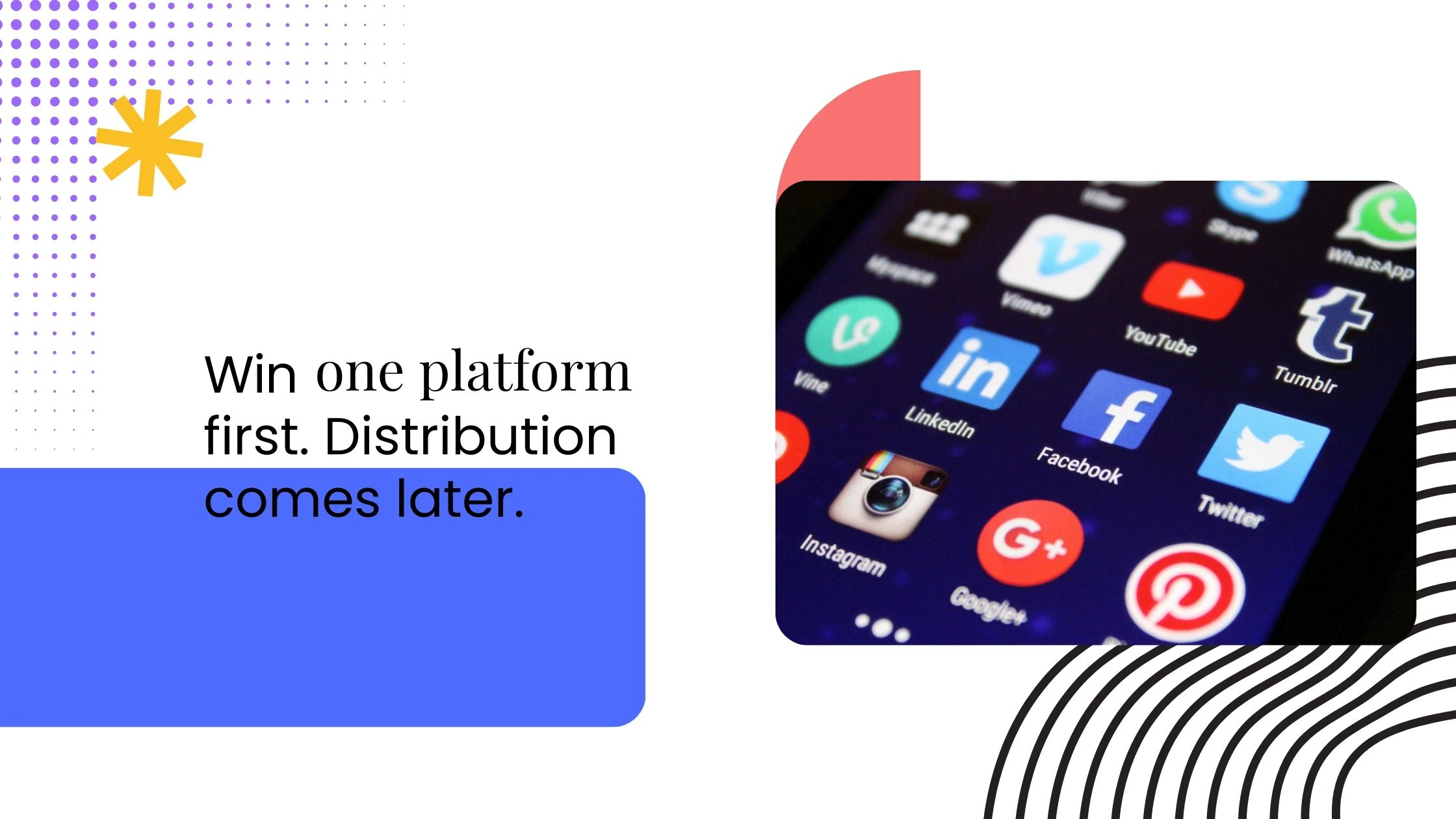
A strong content strategy for coaches doesn’t start with posting everywhere. It starts with choosing one flagship platform and one core weekly content asset you can sustain consistently, without overwhelm.
Most coaches burn out because they try to manage Instagram + LinkedIn + YouTube + email + podcast. Not only is this unnecessary, it’s actually counterproductive. When your energy is fragmented, your message becomes diluted. And diluted content never builds authority.
High-performing coaches do the opposite: They go deep on one platform, build trust faster, and then repurpose intentionally.
If you’re still working on your foundation wrt building an engaged audience, here’s a helpful guide: How to Build an Engaged Audience as a Coach (From Zero to Growth).
Choose ONE Flagship Platform (LinkedIn, Instagram, or YouTube)
Your flagship platform is where:
your ideal client already spends time
your content style naturally fits
you can deliver value in the most effective format
you can stay consistent for months, not days
This anchor platform becomes your home base, where your depth, voice, and authority shine.
Choose ONE Weekly Core Content Asset
Your core content asset is the piece that carries your biggest insight for the week. Everything else is built from it.
Examples of core assets:
A LinkedIn long-form post
An Instagram carousel
A 3-5 minute YouTube video
A thoughtful weekly email
A SEOed blog post
Once you create this single asset, you repurpose it into 3-5 additional posts across the week.
This creates a content plan even for early-stage coaches that feels manageable, sustainable, and consistent, without the pressure to “show up daily.”
Example Repurposing Flow
One reel →
1 story breakdown
1 carousel
1 static quote graphic
1 DM prompt
1 repost on LinkedIn
You didn’t create more content, you used the same idea more intelligently.
Best Flagship Platform by Coach Type
Coach Type | Best Platform | Why It Works |
Career Coach | Your ideal clients are professionals already thinking about growth, promotions, leadership, and career transitions. | |
Wellness / Life Coach | Visual storytelling + lifestyle moments + calm, supportive messaging perform exceptionally well here. | |
Mindset / Transformation Coach | Instagram or YouTube | Short emotional reels work on IG; deeper frameworks and calm teaching work beautifully on YouTube. |
Business / Executive Coach | High-trust environment where authority content outperforms entertainment content. | |
Spiritual / Holistic Coach | Aesthetics + values-based content + soothing visuals thrive here. |
By choosing one platform and one strong weekly asset, you create content that feels grounded, intentional, and meaningful and far more effective at attracting clients than trying to post everywhere at once.
Step 4 - 3 Layer Content System To Attract Clients

Most coaches struggle with consistency because they’re trying to come up with new ideas every day. A better approach and the foundation of a strong content plan is to create a simple weekly rhythm built on three content layers.
These layers ensure your posts work together to build trust, emotional connection, and client readiness.
These coaching content ideas aren’t random. They’re structured to move your audience through the journey you learned earlier: Attract → Nurture → Convert.
Let’s break down the system.
Layer 1 - Authority Post (1x/week)
Your authority post is where your expertise becomes visible. This is the content that makes people think: “This coach really knows what they’re doing.”
Authority posts are not theory. They are clear, structured, and transformational to read.
Use formats like:
frameworks
step-by-step breakdowns
advanced insights that solve recurring problems
Examples Across Niches
Career Coach:
“My 3-step Visibility Ladder to get noticed by leadership without working longer hours.”
Wellness Coach:
“The Energy Triangle: Why sleep, stress, and recovery need to work together, not separately.”
Mindset Coach:
“The Fear-Action Loop: A simple model to break procrastination fast.”
Authority content positions you as someone who can guide, not just educate.
Layer 2 - Connection Post (1-2x/week)
People don’t hire coaches because of perfect strategies. They hire coaches because they feel connected to your values, journey, and worldview.
Connection posts humanize your brand.
Use formats like:
short personal stories
vulnerable moments
lessons learned
your values or philosophy
things you used to struggle with
behind-the-scenes experiences
These posts make prospects think: “I trust this person.”
Examples Across Niches
Career Coach:
“I once stayed in the same role for 3 years because I didn’t know how to advocate for myself. Here’s what changed everything.”
Wellness Coach:
“I burned out twice before I learned this one shift about rest vs recovery.”
Mindset Coach:
“For years, I confused perfectionism with high standards until I realized it was fear in disguise.”
Connection content creates safety, the emotional prerequisite to choosing a coach.
Layer 3 - Conversion Post (1x/week)
Conversion posts gently guide ready prospects toward the next step. This isn’t hard selling, it’s clarity.
Use formats like:
client results
case studies
objection-handling stories
“why this program works” posts
This is where people think: “I want to work with you.”
Example Conversion Posts
Career Coach:
“How a client went from overlooked to promoted in 12 weeks by using the Visibility Ladder.”
Wellness Coach:
“What happened when a client reduced her stress triggers instead of trying another diet.”
Mindset Coach:
“A behind-the-scenes look at how I help clients break fear-based loops.”
Your Weekly Example Calendar (Simple & Sustainable)
Monday: Authority Post
Wednesday: Connection Post
Friday: Conversion Post
This rhythm gives your audience a balanced mix of clarity, connection, and confidence, the three pillars of client attraction.
When repeated week after week, this 3-layer system becomes a predictable engine that steadily brings ideal clients your way.
Step 5 - Turn Content Into Conversations & Clients

Attracting clients through content has nothing to do with going viral. Most coaches don’t need more likes, they need more conversations. Because conversations, not metrics, are what turn content into clients.
If your content is thoughtful, clear, and consistent, people will quietly start trusting you. But trust only turns into clients when you make it easy for someone to take the next step, without pressure or awkward selling.
This is where conversion content and soft CTAs come in.
For refining how you communicate your offer, read: How to Position Your Coaching Offer So Clients Choose You.
Use Soft CTAs That Invite, Not Push
A soft CTA is a gentle invitation, not a pitch. It tells someone:
“If this is relevant to you, here’s how you can get help.”
“If this resonates, here’s your next step.”
Soft CTAs work because they feel safe, simple, and conversational.
Easy CTA lines you can use anywhere:
“DM me the word HELP and I’ll send you the next step.”
“If this resonates, comment READY and I’ll share the framework.”
“If you want help applying this to your situation, my inbox is open.”
“I created a resource that expands on this, message me LINK.”
“If you’d like to explore this transformation, let’s chat.”
These lines don’t interrupt the content experience. They gently turn interest into conversation and conversation into opportunity.
The Simple Funnel: Content → Lead Magnet → Community → Client
This is the most natural, human-friendly funnel for coaches in 2025. It avoids heavy selling and instead builds trust steadily.
1. Content
Your posts create familiarity, safety, and authority.
2. Lead Magnet (Optional, but powerful)
Offer a helpful resource such as:
checklists
templates
mini-guides
audio lessons
short videos
This moves people from your public audience into a relationship space you can develop further.
3. Community (Your Warm Nurture Environment)
A Wylo-style community plays a unique role here. It becomes:
a high-trust, distraction-free space
a nurturing environment where people engage more deeply
a place to share extended value (office hours, frameworks, resources)
a warm audience that is far more likely to convert
Inside a community, you’re not “selling.” You’re supporting, guiding, and building real relationships. Clients naturally emerge from this environment.
To set up this kind of funnel using your community, see: How to Build a Sales Funnel Using a Coaching Community.
4. Client
When someone has consumed your content, received value from your lead magnet, and engaged with your community, they already trust you. By the time you invite them to explore a coaching program, it feels like a natural next step.
This is how to get coaching clients with content, without ever needing to push, chase, or pressure.
When your content naturally leads to conversation, and your conversations naturally lead to community, coaching clients choose you long before you ever “sell” to them. That’s the magic of a well-built, client-first content system.
Step 6 - Mini Content Plans for 3 Types of Coaches
Nothing accelerates clarity like seeing real examples. Below are ready-made mini content plans for three coaching niches, each one structured with Attract → Nurture → Convert posts.
These examples not only give you content ideas for life coaches, wellness coaches, and mindset coaches, but also show you how to shape your weekly content rhythm around client psychology, not guesswork.
You can copy these directly or use them as templates for your own niche.
Wellness Coach - Reduce Stress, Improve Energy
Attract Posts (Cold Audience) - “You get me.”
“If you wake up tired even after 7-8 hours of sleep…”
Highlight hidden fatigue patterns most people ignore.“Why high achievers burn out faster and it’s not because they work more.”
A belief-shift post reframing stress.“The 3 signs your body is overwhelmed (even when your schedule looks manageable).”
A relatable breakdown of early burnout indicators.
Nurture Posts (Warm Audience) – “You can help me.”
“The Energy Triangle: Sleep, Stress, and Recovery, how they work together.”
A simple framework that builds authority.“Before changing your diet, try identifying these 2 hidden stress triggers.”
Reveals how you diagnose root problems inside your coaching process.“A 3-minute breathing reset I teach clients to lower overwhelm instantly.”
Actionable value that builds trust.
Conversion Posts (Ready Audience) - “I’m ready for help.”
“How Anna reduced her stress by 40% in 6 weeks by fixing one daily habit.”
Soft case study with transformation focus.“A look inside my 8-week Burnout Reset Program and who it’s designed for.”
Clear program alignment + gentle CTA.
Career Coach - Promotion, Job Change, Leadership
Attract Posts (Cold Audience) - “You get me.”
“You’re working harder than everyone, but still overlooked. Here’s why.”
A relatable pain post that hits instantly.“If you feel invisible at work, it’s not your performance, it’s your positioning.”
Reframes the problem in a fresh way.“3 subtle professional mistakes that stall promotions without you noticing.”
A hook that creates self-recognition.
Nurture Posts (Warm Audience) - “You can help me.”
“My 3-step Visibility Ladder to get noticed without working longer hours.”
Framework = instant authority.“How to talk about your achievements without feeling awkward or salesy.”
A practical skill-building post.“Here’s how I help clients prepare for performance reviews the right way.”
Behind-the-scenes demonstration of your method.
Conversion Posts (Ready Audience) - “I’m ready for help.”
“How Joe went from overlooked to promoted in 12 weeks.”
A real transformation story.“Who my 1:1 Career Acceleration Program is for (and not for).”
Natural qualification + invitation.
Mindset Coach - Fear, Self-Belief, Confidence
Attract Posts (Cold Audience) - “You get me.”
“You’re not procrastinating because you’re lazy. You’re procrastinating because the goal feels unsafe.”
Strong emotional resonance.“Why your brain talks you out of the things you want the most.”
A belief-shifting idea.“If you overthink every decision, try noticing this one pattern.”
Simple, relatable psychological insight.
Nurture Posts (Warm Audience) - “You can help me.”
“The Fear-Action Loop: A simple model to break paralysis.”
Framework + clarity.“A 2-minute reframing tool I teach clients to quiet self-doubt.”
Value-forward micro win.“Here’s how I help clients build self-trust without relying on motivation.”
Method insight = trust builder.
Conversion Posts (Ready Audience) - “I’m ready for help.”
“How Sara shifted from fear-driven decisions to confident action in 30 days.”
Clear, relatable transformation.“Inside my Confidence Rebuild Program, what we focus on and why it works.”
Transparent explanation + CTA.
These micro content plans dramatically increase reader dwell time, which is key to strongest engagement signals.
Step 7 - The 30-Day Content-to-Client Challenge
If you’ve ever felt stuck, inconsistent, or unsure whether your content actually leads to clients, this 30-day challenge will change everything. It’s simple, structured, and designed for coaches who want a content plan that delivers conversations, not just likes.
This is your 30-day content plan for coaches that moves people from awareness → trust → interest → clients.
Follow it exactly and expect 3-5 warm leads (often more) by the end of the month.
Week 1 - Build Authority Through Clarity (2 Key Authority Posts)
The only reason content doesn’t attract clients is confusion. Week 1 is all about removing that confusion for you and your audience.
What you’ll do this week:
Define your ONE transformation (your signature result).
Clarify your ONE core framework or method.
Publish two authority posts that position you as the guide.
Post ideas:
“The 3-step method I use to help clients ______.”
“Most people think ______, but here’s what actually works.”
This week anchors your expertise.
Week 2 - Stories, Nurture, and Lead Magnet Activation
People don’t buy coaching because of frameworks alone, they buy because they feel connected, understood, and hopeful.
What you’ll do this week:
Share two connection/nurture posts
Tell a personal story or origin lesson
Release or promote one simple lead magnet
(checklist, mini-guide, audio lesson, etc.)
Examples:
“Why I became a coach (the honest version).”
“What I wish I knew 3 years ago about ______.”
“I made something that will help you: [Lead Magnet].”
Your goal is to build emotional trust while growing your warm audience.
Week 3 - Case Studies + Conversion Content
Now your audience is warm. They’ve seen your value and your philosophy. It’s time to show them what transformation actually looks like.
What you’ll do this week:
Share 2-3 client stories, case studies, or anonymous wins
Post your first clear conversion piece
(“Here’s how my program works” or “Who I help.”)
Examples:
“How my client ______ went from ______ to ______ in 8 weeks.”
“A behind-the-scenes look at my coaching process.”
“If you’re struggling with X, this is the process that helps.”
This week builds credibility and readiness.
If you're planning to scale using group coaching, this guide will help: How to Launch Your First Group Coaching Program Successfully.
Week 4 - Soft Offers + Booking Invitations
You’ve built authority. You’ve built trust. You’ve shown transformation. Now you invite, softly, naturally, and without pressure.
What you’ll do this week:
Post two soft offers
Share one booking invitation for a clarity/discovery call
Re-share your best client story for reinforcement
Examples:
“I have 2 coaching spots opening next week. If you feel aligned, DM me GROWTH.”
“If you’re ready for support and want to grow, my inbox is open.”
“Here’s what working with me looks like (process breakdown).”
The secret of Week 4: You’re not “selling.” You’re simply showing how someone can take the next step.
Downloadable Checklist (Copy & Paste Into a PDF or Community Resource)
30-Day Content-to-Client Checklist
✔ Week 1: Two Authority Posts
✔ Week 2: Two Stories + Lead Magnet
✔ Week 3: Client Wins + Program Breakdown
✔ Week 4: Two Soft Offers + Booking Invitation
✔ DM CTA added to at least 50% of posts
✔ Respond to every comment within 24 hours
✔ Track conversations → leads → calls booked
Add some of this inside your Wylo-powered community as a downloadable asset to deepen trust and nudge prospects softly into your ecosystem.
Common Content Mistakes That Keep Coaches Invisible

Most coaches work incredibly hard on content, yet remain invisible online. Not because they aren’t talented, but because they unknowingly fall into patterns that weaken trust, overwhelm readers, or blur their message.
Below are the most common content mistakes coaches make, along with the exact fixes to regain clarity, authority, and momentum.
1. Posting Like a Creator, Not a Coach
Creators optimize for entertainment, aesthetics, and algorithms. Coaches must optimize for trust, clarity, and transformation.
Creators focus on reach. Coaches focus on resonance.
Fix: shift from “What will get likes?” to: “What will move my ideal client one step closer to clarity?”
Your content should teach, guide, reframe, and build safety, not entertain for the sake of numbers.
2. Teaching Too Much (Leading to Overwhelm, Not Action)
Many coaches think depth = dumping everything they know into one post. This actually repels clients. When people feel overwhelmed, they don’t take action, they freeze.
Fix: use the rule: One idea → one insight → one takeaway. Keep frameworks simple and let depth show through clarity, not volume.
Your goal is not to prove how much you know, your goal is to help someone understand themselves better.
3. No Emotional Layer in the Content
Intellectual content alone doesn’t convert. People choose coaches because they feel:
understood
seen
safe
hopeful
If your content lacks emotion, warmth, or relatability, people may respect you, but they won’t hire you.
Fix: add emotional grounding -
a short personal story
a relatable struggle
a human moment
a belief shift
something you learned the hard way
Emotion builds connection. Connection builds clients.
No Repurposing (Reinventing the Wheel Every Week)
Coaches often exhaust themselves by trying to create fresh content every day. This leads to burnout and inconsistency, the two biggest killers of trust.
Fix: choose one weekly core asset and repurpose it into 3-5 smaller posts. (Not repeating; re-framing.)
It’s not about more content, it’s about more touchpoints around the same idea.
5. No Weekly System (Posting Randomly)
Random posting creates random results. If your audience can’t anticipate your rhythm, your content can’t build momentum.
Fix: use the 3-Layer Weekly System from what we discussed above -
Authority (Mon)
Connection (Wed)
Conversion (Fri)
Predictability builds trust, especially for coaching clients who crave clarity and structure.
6. No Consistent Call-to-Action (People Don’t Know the Next Step)
Even coaches with great content often get no inquiries because their posts end abruptly. Your audience doesn’t know:
where to go next
how to get help
whether you’re even taking clients
Fix: use soft CTAs like -
“DM me CLARITY if this resonates.”
“Comment READY for the framework.”
“If you truly want to change, I can guide you.”
Clear direction = clear conversions.
7. Talking to Everyone (Which Means Talking to No One)
Broad, generic content makes your message invisible. People scroll past because nothing hits specifically enough to feel relevant.
Fix: Speak to one person, one struggle, one transformation at a time. Specificity creates resonance. Resonance creates clients.
When you fix these mistakes, your content becomes clearer, stronger, more trustworthy, and more client-attractive, without needing to post more or become a “content machine.”
FAQs about Content Marketing for Coaching Businesses
1. What content works best for coaching clients?
The best content for coaching clients is content that creates clarity, emotional resonance, and trust. Authority posts show your expertise, connection posts make people feel understood, and conversion posts help them see the path forward. When these three work together, clients naturally move closer to working with you.
2. Do I need video to get clients?
Video is great, but it’s not mandatory. Many successful coaches attract clients through written content, stories, images, carousels, and email. What matters most is consistently sharing insights that shift beliefs and build trust, not the format itself.
3. How often should coaches post to attract clients?
You don’t need to post daily. A sustainable rhythm of 2-3 posts per week (Authority → Connection → Conversion) is enough to build trust and generate conversations. Consistency matters more than frequency, and quality matters more than reach.
4. Can content marketing work without a big audience?
Absolutely. Most coaching clients come from warm, small audiences, not viral reach. What matters is depth, the quality of conversations, the clarity of your message, and the trust you build, not the size of your following.
5. Which social media platform is best for client attraction?
Choose the platform where your ideal client already spends time. LinkedIn works best for career and business coaching, Instagram for wellness and mindset coaching, and YouTube for video-first deeper educational content. You only need one flagship platform to start attracting clients.
6. How long until content brings clients?
Most coaches begin seeing warm leads within 30-60 days if they follow a structured system and include soft CTAs. Trust builds incrementally, and once people feel safe, understood, and guided, they move toward conversation, which is where you can turn prospects into clients seamlessly.
Conclusion
The coaches who consistently attract clients aren’t creating endless content, they’re creating intentional content that builds trust, shifts beliefs, and shows people a clear path forward. You don’t need to post more. You need to post with purpose.
Once your message is focused and your weekly rhythm is simple, content stops feeling overwhelming and starts becoming a quiet engine that brings the right people your way.
If you’d like a supportive space to put this system into practice, a place to share your content, nurture your warm audience, and guide people toward working with you, you can create a free community with Wylo and start building your ecosystem in minutes.

About the author - Senthil
Marketing Head of Wylo, a highly comprehensive and customizable community platform for coaches, brands, and creators. Senthil helps coaches design clear marketing systems, strong positioning, and sustainable monetization models through practical community frameworks and execution-first strategy.