Coaching business
How to Launch Your First Group Coaching Program Step by Step
Launching a group coaching program is simpler than you think when you have the right structure. This guide covers pricing, audience building, coaching delivery, and how to set everything up inside an online coaching community.
Contents
Launching your first group coaching program can feel overwhelming, not because you lack expertise, but because most coaches try to launch without a clear demand-and-delivery system.
They jump from 1:1 sessions straight into group offers, hoping momentum will magically appear. When it doesn’t, it feels like failure. It isn’t.
What’s usually missing is structure: knowing who the program is for, why people will join together, and how the experience will be delivered confidently from day one.
A successful group coaching program isn’t built on hype or audience size. It’s built on validation, clarity, and a repeatable process that removes uncertainty for both you and your clients.
If you’ve started getting results in 1:1 but feel the time ceiling creeping in, this guide shows you how to move into group delivery without chaos.
In How to Build a Scalable Coaching Business with a Community (Coming soon), we explain why group programs and communities are the natural next step once 1:1 delivery hits a ceiling.
Here, we’ll show you how to launch a group coaching program that fills, delivers outcomes, and becomes a repeatable path to scale, without trial and errors or burnout.
TL;DR
Validate your group idea using patterns from real 1:1 clients
Choose the right group format for your niche and depth of work
Define a clear transformation and outcome for the cohort
Design a simple, structured curriculum that people can follow together
Set group size, pricing, and logistics with confidence
Warm up your audience before launching
Use simple fill strategies to enroll your first cohort
Deliver, review, and iterate to improve each launch
What Is a Group Coaching Program?
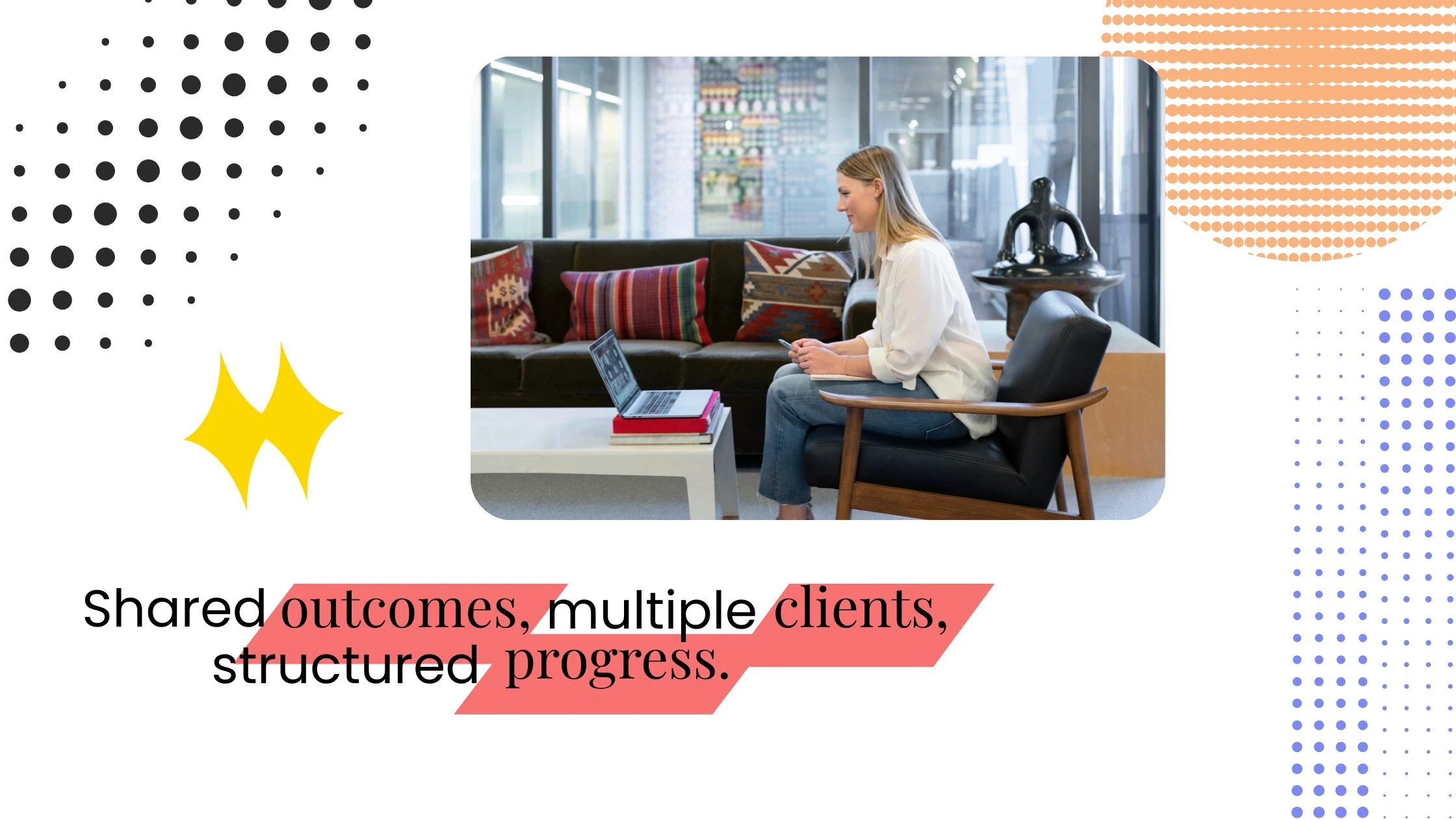
A group coaching program is a structured coaching experience where multiple clients move toward a shared outcome together, guided by one coach in most scenarios through a defined process.
Unlike ad-hoc group calls, a true group coaching program has a clear group coaching structure, a start and end point, a curriculum, scheduled sessions, and shared accountability that keeps participants progressing in sync.
How it differs from 1:1 coaching
In 1:1 coaching, progress depends heavily on the coach’s time and personalization.
Group coaching shifts the emphasis from constant customization to a repeatable pathway. Participants still receive guidance, but they also learn from peer questions, shared momentum, and collective problem-solving.
The value isn’t diluted, it’s multiplied. Clients get perspective beyond their own blind spots, while the coach delivers impact at scale.
Why group coaching works in 2025
Group coaching programs are thriving now for three practical reasons.
Leverage: coaches can deliver the same transformation to more people without increasing hours linearly.
Accountability: progress accelerates when participants see others showing up, applying lessons, and sharing wins.
Community: learning sticks better when it’s social. In an always-online world, a well-run group creates belonging, consistency, and follow-through, things many clients struggle to build alone.
Who group coaching is (and isn’t) for
Group coaching is ideal when clients share similar problems, stages, and goals and when the transformation can be taught through a structured path. It’s especially effective for skill-building, habit change, mindset shifts, and business systems.
It’s not a fit if every client’s challenge is radically different, if outcomes require constant crisis management, or if you haven’t yet clarified a repeatable method. In those cases, 1:1 coaching remains the better starting point.
When the structure is right, a group coaching program delivers deeper results for clients and sustainable growth for coaches.
Validate Demand for Your Group Coaching Program
Most group coaching programs struggle to fill, not because the coach lacks expertise, but because the group coaching launch starts with curriculum instead of demand.
Slides get built, sessions get planned, and dates get announced, before there’s proof that people actually want this transformation in a group.
If you want to know how to fill a group coaching program, validation has to come first. Demand tells you what to teach, how to structure it, and why people will commit together. Without it, even a well-designed program feels risky to buyers and stressful to sell.
Validation doesn’t require a big audience or complicated funnels. It requires three simple signals that reduce uncertainty before you build.
The Pattern Test
Start by looking at your recent 1:1 clients or conversations. Are the same problems showing up again and again? Do people get stuck at the same point, ask similar questions, or need the same mindset shift? A group works when there’s a shared pattern, not just a shared label.
For example, multiple founders struggling with decision fatigue can move together, even if their businesses differ.
The Pull Test
Next, test whether people lean in before you announce a program. Share a short post, email, or DM that names the problem and hints at a group solution. Ask for a simple action, reply, comment, or join a waitlist.
When people respond without being pushed, that’s pull (inbound). Pull means your framing resonates, and the idea feels relevant enough to explore.
The Payment Test
Finally, introduce a small financial commitment. This could be a low-cost workshop, a refundable deposit, or early-access spots. You’re not trying to maximize revenue, you’re confirming seriousness.
If people are willing to pay something to move forward, you’ve crossed the most important threshold for a successful launch.
When these three signals align, you’re no longer guessing. You’re building a group coaching program around real demand, making the launch calmer, the messaging clearer, and the program far easier to fill.
Choose the Right Group Coaching Format
One of the fastest ways to struggle when you run a group coaching program is choosing the wrong format. The group coaching structure you pick determines how results are delivered, how confident clients feel joining, and how manageable the program is for you as a coach.
Here’s a clean, decision-based breakdown.
Cohort-Based Group Coaching Programs
A cohort-based program has a fixed start and end date, a shared curriculum, and participants moving through the same stages together. This format works exceptionally well for first-time launches because it creates urgency, focus, and momentum.
Cohorts are ideal when your transformation needs sequencing; clients must understand step one before step three to make sense. The shared timeline also strengthens accountability, which increases completion rates and testimonials. For new coaches launching group offers, cohorts reduce complexity and make delivery feel contained and confident.
Ongoing Membership Group Coaching Programs
Membership-style group coaching runs continuously, usually on a monthly basis, with recurring calls, community discussions, and evolving themes rather than a fixed curriculum.
This format suits transformations built on habits, consistency, or long-term support, such as wellness, mindset, or creative practices.
Memberships work best once you already know what keeps people engaged over time. Without clarity, they can feel vague to new clients and harder to sell upfront. But when positioned well, they create predictable revenue and deep relationships.
Hybrid Group Coaching Programs
Hybrid models combine group coaching calls with structured content or occasional 1:1 touchpoints. This format balances scale with personalization and works well for higher-stakes or nuanced transformations.
Hybrids are powerful, but they require more moving parts. They’re best introduced after you’ve validated demand and clarified your core method; otherwise, delivery can become heavy too quickly.
Choose the Right Group Coaching Format
If your transformation needs tight sequencing and a clear finish line, choose a cohort.
If it’s built around habits or ongoing support, choose a membership.
If depth matters but scale is still important, a hybrid model fits best.
Choosing the right format early simplifies everything that follows, from curriculum to pricing to how easily your group coaching program fills.
If you’re still transitioning away from 1:1 delivery, this breakdown connects directly with the shift explained in How to Shift from 1:1 to Group Coaching (Coming soon).
Define the Transformation for your Group Coaching Program
People don’t join a group coaching program because of the call schedule or the number of sessions. They join because they can clearly see what will change for them.
Before you outline lessons or modules, the most important part of your group coaching curriculum is defining the transformation with precision.
A strong transformation always has two ends: Point A, where your clients are now, and Point B, where they expect to be after the program.
Point A should feel familiar and specific, frustration, confusion, inconsistency, or overwhelm that they already recognize in themselves.
Point B should feel tangible and achievable, not aspirational. It answers the quiet question clients ask before committing: “What will be different in my life when this ends?”
This transformation needs to be both practical and emotional. Practically, clients want skills, systems, or habits they can use immediately. Emotionally, they want relief, confidence, clarity, or momentum. When both are named clearly, the decision to join feels safer because the outcome feels real.
Defining the transformation also creates alignment across the entire program. It shapes how sessions are structured, what progress looks like week to week, and how participants support one another.
Without this clarity, a group coaching program can feel busy but unfocused, helpful, but not compelling enough to commit to.
When clients can clearly articulate the before and after in their own words, you’ve done the work correctly. At that point, your group coaching curriculum isn’t just a collection of topics; it’s a guided path toward a shared outcome that people are willing to move through together.
Design a Simple Group Coaching Curriculum That Delivers

A strong group coaching curriculum is not about packing in more content. It’s about sequencing the right actions so participants actually move from where they are to where they want to be, together.
When people search for what a group coaching program should include, they’re really asking one thing: How do I design this so it gets results without overwhelming everyone?
The most effective group coaching structure is simple, paced, and outcome-led. It creates momentum week after week, keeps energy high in sessions, and makes progress visible between calls. Here’s how to design a curriculum that delivers real outcomes, not just “busy” sessions.
Duration: Why 6-12 Weeks Wins for Group Coaching Programs
For most transformations, 6-12 weeks is the sweet spot. Shorter programs often don’t provide participants with enough time to develop habits or achieve meaningful change. Longer programs usually lose urgency and engagement, especially for a first launch.
Six to twelve weeks works because it balances focus and momentum. Participants can commit fully, stay engaged, and clearly see progress without feeling stuck in a seemingly endless program. It also gives you enough room to guide them through a complete transformation arc, from clarity, to action, to consolidation.
If this is your first group coaching program, start on the shorter end. You can always extend or relaunch once you see what works.
Weekly Coaching Progression: A Clear Path
One of the biggest mistakes coaches make is designing sessions as disconnected topics. A strong group coaching curriculum feels like a journey, where each week builds directly on the last.
Here’s a clean 8-week example roadmap to illustrate how progression should feel:
Week 1 - Clarity & Baseline
Participants define their current state, constraints, and goals. Everyone gets aligned on what “success” looks like by the end of the program.
Week 2 - Reframing the Core Problem
You challenge existing assumptions and introduce your core perspective or method. This is where belief shifts begin.
Week 3 - Foundational System or Skill
Participants learn and apply the first key system or habit that creates early wins.
Week 4 - Implementation & Feedback
They apply what they’ve learned, share obstacles, and refine their approach with guidance and peer insight.
Week 5 - Advanced Application
You deepen the work, more nuance, more ownership, more confidence in execution.
Week 6 - Consistency & Resistance
This week focuses on what gets in the way: doubt, inconsistency, or external friction and how to handle it.
Week 7 - Integration
Participants connect the pieces, adapt the method to their real-life context, and strengthen what’s working.
Week 8 - Consolidation & Next Steps
You lock in the transformation, reflect on progress, and help them plan how to sustain results after the program ends.
This kind of progression makes the group coaching program feel intentional and complete, not like a series of standalone workshops.
Session Structure: How to Run Group Coaching Sessions Well
Even the best curriculum fails if sessions feel flat or chaotic. A clear agenda keeps energy high and ensures every call moves people forward. A simple structure that works across most niches looks like this:
Start by grounding the group with wins and reflections. This reinforces progress and builds momentum.
Move into the core teaching or framework, focused on one clear idea or skill.
Then create space for application, discussion, reflection, or guided exercises that help participants use what they’ve learned.
Close with clear actions, so everyone leaves knowing exactly what to do before the next session.
This structure aligns naturally with how to run group coaching sessions effectively: focused, participatory, and outcome-driven. The goal is not to talk more, but to guide better.
The Between-Session System: Where Results Actually Happen
Most outcomes in a group coaching program don’t happen on the call, they happen between sessions. Without a between-session system, participants lose momentum and fall back into old patterns.
A strong group coaching structure includes lightweight but consistent touchpoints:
Weekly check-ins that prompt reflection and accountability
Simple prompts or questions that reinforce the week’s focus
Optional partner or small-group pods for peer accountability
A shared space where progress, questions, and insights are visible
This layer is what turns insight into behavior change. It keeps participants engaged, connected, and moving forward together, even when motivation dips.
When your curriculum combines clear duration, logical progression, focused sessions, and strong between-session support, your group coaching program stops feeling like “content delivery” and starts functioning like a guided transformation.
Group Coaching Program Pricing, Group Size & Logistics
Once your group coaching program is validated and structured, the next friction point is execution. This is where many launches wobble, not because the idea is weak, but because pricing feels arbitrary, group size is guessed, and logistics are decided too late.
When people search for how to price a group coaching program or how many people to have in a group coaching program, they’re looking for decision logic, not vague ranges.
This section turns those decisions into a clear operating model.
Ideal Coaching Group Size (Why It Matters)
For most coaches, the ideal group size is 8-20 participants.
Below 8, the group lacks energy and peer learning. You end up over-delivering like it’s still 1:1, which breaks leverage.
Above 20, depth drops quickly unless you have co-facilitators or a highly systemized format. Quiet members disengage, dominant voices take over, and outcomes become uneven.
The goal of group coaching is shared momentum with individual progress. That balance is easiest to maintain when:
Everyone has space to speak
Peer learning actually happens
You can still notice patterns and intervene meaningfully
For a first launch, aim for 10-15 participants. It’s large enough to create group dynamics and small enough to manage confidently.
Pricing Anchors for Group Coaching Offers
Most competitors list prices without explaining why those numbers make sense. A better way to price group coaching is to anchor it to outcome value and support intensity, not call count.
A simple pricing equation looks like this:
Price = Value of the Outcome × Level of Access × Depth of Support
Using that lens, pricing typically falls into three clear bands:
Beginner / Foundational Outcomes
These programs help participants get clarity, build a baseline skill, or install a simple system.
Typical range: $300-$1,000
Support is structured but light, with group calls and basic accountability.
Specialized or Skill-Specific Transformations
These programs solve a defined problem with a clear before-and-after.
Typical range: $1,000-$3,000
Support is more involved, with tighter sequencing, feedback, and active facilitation.
Premium or Life/Business-Critical Outcomes
These programs affect income, leadership, health, or long-term capability.
Typical range: $3,000-$10,000+
Support includes deeper access, higher accountability, and more direct interaction.
What matters most is not the number, but whether the price feels proportional to the certainty of the outcome. When the transformation is clear and the process feels safe, price resistance drops naturally.
Logistics Checklist for Group Coaching Programs
Strong logistics make your program feel professional and predictable. Weak logistics create friction that erodes trust, even if the coaching itself is good.
Before you open enrollment, lock these in:
Time Zones & Scheduling
Choose one primary time zone and be explicit about it. If your audience is global, set expectations early about live attendance versus replays.
Communication Rules
Define where questions go, how often you respond, and what kind of support participants can expect. Clear boundaries prevent burnout and confusion.
Session Access & Replays
Decide upfront whether sessions are recorded, how long replays are available, and how they’re shared. Consistency matters more than flexibility.
Community or Group Space
Participants need one clear place for updates, prompts, and discussion. Fragmented communication kills engagement.
Onboarding & Orientation
Send a clear welcome message explaining how the program works, what’s expected, and how to get the most value. This sets the tone for the entire experience.
Boundaries & Scope
Be explicit about what is included and what isn’t. Group coaching works best when expectations are clean and shared.
When pricing, group size, and logistics are decided intentionally, your group coaching program stops feeling like an experiment and starts running like a system. That operational clarity is what allows you to scale confidence, not chaos, as you move toward launch.
Build the Pre-Launch Engine (2-4 Weeks)
A successful group coaching launch rarely starts with an announcement post. It starts weeks earlier, with a short, intentional pre-launch engine that warms the right people and filters out the rest.
When coaches search how to promote a group coaching program, they often find generic advice like “share on social media” or “send emails.” What’s missing is a clear sequence.
Think of the pre-launch as a decision-prep phase. Your goal is not to sell yet. It’s to help potential participants understand the problem, trust your approach, and become more interested before enrollment opens.
A simple 2-4 week runway is more than enough when it’s structured.
Group Coaching Waitlist Page (What It Must Say)
Your waitlist page is not a sales page. It’s a commitment checkpoint. If it’s vague, you’ll attract curiosity without intent. If it’s clear, the right people will raise their hand early.
At a minimum, the page should communicate four things plainly:
Transformation: What changes for someone who completes this group coaching program? This should be framed as a before-and-after, not a list of sessions or topics.
Who it’s for: This reduces friction later and increases trust. The page needs to mention who the program is not for too. Exclusion is not a risk here; it’s a signal of clarity.
Format and timing: Cohort-based or ongoing, live or mixed, and when it starts. Uncertainty kills sign-ups more than price at this stage.
Single clear action: Join the waitlist. Nothing else. No distractions, no upsells.
A good waitlist page doesn’t convince. It clarifies. The people who join should already feel, “This is likely for me.”
Warm-Up Coaching (Not Promotional) Content
Once the waitlist exists, your job is to warm it. This is where most promotion advice goes wrong by pushing too hard, too early.
Effective warm-up content does three things in parallel:
It shifts beliefs. Address the misconceptions holding your audience back from solving this problem on their own. This reframes why your group coaching program exists in the first place.
It clarifies fit. Repeatedly show who this program is designed for and who it isn’t. This reduces last-minute objections and ghosting during launch.
It demonstrates proof. Not hype. Small wins, patterns you’ve seen in clients, or insights that only come from experience. Proof builds confidence before price is ever mentioned.
You don’t need volume here. Two to three focused pieces of content per week is enough if they all point to the same transformation and invite people to the waitlist naturally.
Pre-Launch Event Option (Optional, Not Mandatory)
Some coaches benefit from a pre-launch event, others don’t need it at all. The key is not whether you run one, but why.
A short workshop, live training, or challenge can work if:
Your audience needs to experience your approach to believe it
The problem you solve requires context or demonstration
You want a concentrated burst of engaged leads before opening enrollment
If you choose this route, keep it simple. One clear topic, one live session or short series, and one outcome. The event should naturally lead into your group coaching program as the next step, not feel like a disguised sales pitch.
If your audience is already warm and the transformation is clear, you can skip this entirely and move straight to enrollment.
The purpose of a pre-launch engine is not noise. It’s readiness. When done well, enrollment feels less like promotion and more like opening the doors to people who were already waiting.
Fill Your First Group Coaching Program Even With Small Audience
One of the most searched questions around launching a group coaching program is how to fill a group coaching program when your audience is still small. The common advice is vague: “post more,” “be consistent,” or “grow your list.” None of that helps when you’re weeks away from launch.
Filling your first group coaching program is not an audience-size problem. It’s a pathway problem. You need a few clear levers that move interested people from awareness to a decision, without just relying on reach or algorithms.
Here are five practical fill levers that work even with a small, warm audience. You don’t need all five. Two or three, executed clearly, is enough.
These fill strategies work best when they sit on top of a clear attraction system, which is covered step-by-step in How to Build a Coaching Business That Attracts Clients.
Lead Magnet → Nurture → Invite
This is the most reliable way to promote a group coaching program without pressure. Start with a focused lead magnet that solves a small but real version of the problem your group program addresses. The goal isn’t to teach everything; it’s to create momentum and trust.
From there, nurture briefly. A short email sequence, a few thoughtful messages, or a lightweight community space where you expand on the idea is enough. What matters is continuity.
Each touchpoint should reinforce the same transformation and point toward the group program as the logical next step.
The invite should feel natural, not salesy. You’re not convincing people; you’re opening enrollment to those who already engaged. This lever works because it mirrors how people actually decide, through gradual clarity, not instant persuasion.
DM Pathway (Keyword CTA)
Direct messages convert well because they remove friction. But they only work when there’s a clear reason to start the conversation.
Instead of generic CTAs, use a keyword-based invite tied to the transformation. For example, asking people to DM a specific word signals intent and makes the conversation feel purposeful from the first message.
The key here is consistency. When your content, stories, and posts all point to the same problem and outcome, DMs stop feeling random. They become an extension of the positioning you’ve already established.
This lever works best when paired with a clear client attraction flow.
Past Clients and Reactivation List
Your fastest wins often come from people who already trust you. Past clients, former leads, and warm conversations that never converted are ideal candidates for a first group program.
This isn’t about blasting an announcement. It’s about personal outreach with context. A simple message that acknowledges where they were, what you’ve built since, and why this group format might suit them now is enough.
Reactivation works because the decision barrier is lower. These people don’t need to be sold on you, only on whether now is the right time.
Partner Promos (Small Audiences Convert Better)
You don’t need influencers or massive lists. Small, aligned audiences convert better because trust is already present.
A partner promotion can be as simple as:
A joint live session
A guest workshop inside someone else’s community
A shared email or post to a complementary audience
What matters is relevance, not size. If the audience already struggles with the problem your group coaching program solves, even a small collaboration can fill multiple spots quickly.
This lever works especially well when your offer is clearly positioned and easy to explain in one sentence.
Live Invite Event (Short Workshop)
A short live workshop or training can act as a decision accelerator. It gives people a taste of your thinking, your structure, and your coaching style, all in one place.
This doesn’t need to be complex. One focused topic, one clear outcome, and one invitation at the end. The purpose is not to teach everything, but to help people experience clarity and see the group program as the next step.
If you’ve already validated demand and warmed your audience, this single event can do more than weeks of posting.
The Real Reason These Levers Work
None of these approaches rely on volume. They rely on alignment. Each lever shortens the distance between interest and decision by reducing uncertainty.
When filling your first group coaching program feels hard, it’s rarely because people aren’t interested. It’s because there isn’t a clear path for them to say yes. Build that path, and filling the program becomes a process, not a gamble.
How to Run Your Group Coaching Sessions Confidently (Delivery System)
Knowing how to run group coaching sessions well is what separates programs that feel inspiring from programs that actually create results. Many coaches focus heavily on launch and filling seats, but confidence is built in delivery.
When delivery is clear and structured, group coaching stops feeling chaotic and starts feeling professional, calm, and effective.
Strong delivery is not about being more charismatic or talking more. It’s about having a repeatable session system that supports different personalities, keeps energy high, and consistently turns insight into action. These group coaching tips focus on exactly that.
Your First Coaching Session Plan (Exact Flow)
The first session sets the tone for the entire program. If it feels unclear or rushed, participants disengage quietly. If it feels grounded and intentional, trust forms quickly.
A strong first session follows a simple flow:
Start by grounding the group. Spend the first few minutes setting context: what this program is about, how the group will work together, and what kind of progress is expected. This reduces anxiety and creates psychological safety.
Next, establish shared norms. Clarify how participation works, how questions will be handled, and what commitment looks like. This isn’t about rules; it’s about alignment. When expectations are clear, people relax and engage more openly.
Then deliver the core framework for the week. Keep it focused. One idea, one lens, and one practical shift. Group coaching sessions work best when depth replaces breadth.
Close the session by translating insight into action. Every participant should leave knowing exactly what to do before the next call and why it matters. Confidence in delivery comes from knowing the session created forward movement, not just discussion.
Managing Group Dynamics (Dominant vs Silent, Safety Norms)
Every group has people with different energy types. Some participants speak easily. Others need time and space. Your role as a facilitator is not to give equal airtime, but to create equal safety.
When someone dominates the conversation, gently redirect without shutting them down. Acknowledge their contribution, then open the space back to the group. This keeps momentum without letting one voice set the tone.
For quieter participants, don’t force engagement. Instead, create multiple entry points. Reflection prompts, written responses, or smaller breakout discussions often unlock participation more effectively than direct questions.
Safety norms matter more than participation tactics. When people feel they won’t be judged, rushed, or corrected publicly, they contribute naturally over time. This is one of the most overlooked group coaching tips, yet it’s critical for long-term engagement.
Turning Sessions Into Outcomes (Actions + Check-ins)
Insight alone does not create results. Outcomes come from what happens between sessions. This is where many group coaching programs fail quietly.
End each session with one clear action, not a list. The action should be specific, achievable, and directly connected to the session’s theme. Ambiguous homework leads to inconsistent follow-through.
Check-ins close the loop. Whether through a shared thread, a short reflection prompt, or a simple progress update, check-ins reinforce accountability without pressure. They signal that progress is noticed and supported.
When participants see their actions acknowledged and reflected back, confidence grows on both sides. You gain confidence because the system works. They gain confidence because results feel earned, not accidental.
Running group coaching sessions confidently is not about performance. It’s about structure. When the delivery system is clear, the group carries momentum forward and your role shifts from managing chaos to guiding progress.
Keep Engagement High After Week 2 (Where Most Clients Drop)

If you’ve ever run or joined a group program, you’ve seen this pattern. Week one is energetic. Week two is still solid. After that, engagement starts to dip. This is not a motivation problem. It’s a structure problem. Most coaches lose momentum after week two because they don’t design for sustained participation.
Knowing how to run a group coaching program well means planning for this drop before it happens. Strong engagement systems keep people involved even when life gets busy, excitement fades, or progress feels slower.
Coaching Weekly Rituals That Anchor Participation
Engagement stays high when participants know what rhythm to expect. A weekly ritual creates that rhythm. It could be a consistent check-in question, a short reflection, or a weekly intention-setting prompt. The format matters less than the predictability.
When participants expect a recurring moment of participation, engagement becomes habitual rather than effort-based. This is one of the simplest yet most effective group coaching tips because habits carry groups through low-energy weeks.
Accountability Threads That Actually Get Used
Accountability fails when it feels heavy or public in the wrong way. It works when it feels supportive and lightweight. Instead of asking participants to “report progress,” anchor accountability to one small, specific action.
A simple prompt like “What did you complete since the last session?” or “What’s one thing you’re committing to this week?” lowers resistance and increases follow-through. Over time, these threads become proof of momentum, which reinforces engagement naturally.
Designing for Small Coaching Wins (Not Big Breakthroughs)
Big breakthroughs are rare. Small wins are common, and they are what keep people engaged. Group programs that only celebrate major outcomes unintentionally discourage participants who are still in progress.
Design each week so participants can experience a visible win, even if it’s subtle. Progress clarity builds confidence, and confidence keeps people showing up. This is especially important when running a group coaching program for beginners or first-time cohort launches.
Simple Tracking That Creates Momentum
Tracking does not need dashboards or complex systems. It needs consistency. A weekly yes/no check, a single progress metric, or a short reflection question is enough.
Tracking works because it externalizes progress. Participants stop relying on how they feel and start seeing what they’ve actually done. That shift alone can double engagement after the early weeks.
Community Prompts That Spark Interaction
Engagement between sessions matters more than engagement during calls. Well-designed community prompts keep the group alive throughout the week. These prompts should invite reflection or application, not debate or performance.
A structured community space makes this significantly easier. When conversations, check-ins, and resources live in one place, participation feels frictionless instead of scattered.
This is where a platform like Wylo fits naturally, not as a sales tool, but as a way to support consistent engagement without relying on multiple external apps or constant reminders.
Groups don’t drop because participants stop caring. They drop because the program stops guiding behavior. When engagement is designed into the system, momentum carries itself and your role shifts from chasing participation to facilitating progress.
Most engagement issues come from avoidable design mistakes, which we break down in 5 Mistakes Coaches Make When Building a Coaching Community (Coming soon).
Post-Launch Group Coaching Program Review

Launching a group coaching program is only half the work. The real leverage comes from what you do after the first run ends. A proper post-launch review turns a one-time launch into a repeatable system you can refine, relaunch, or scale with confidence.
This step is often skipped, which is why many coaches feel like every group coaching launch starts from zero.
A strong review answers one question: Should this program be repeated, evolved, or repositioned?
Metrics to Track (What Actually Tells You If It Worked)
Vanity signals like “good vibes” or positive messages are not enough. To improve your next group coaching program launch, you need a few concrete indicators that reflect delivery quality, demand strength, and conversion health.
Start with attendance. Look at live session participation, not just registrations. Consistent drop-offs often point to pacing issues, unclear outcomes, or weak between-session engagement.
Next, review completion. How many participants reached the end of the program and finished the core work? Completion rates reveal whether your curriculum and workload were realistic for real lives, not ideal ones.
Testimonials matter, but quantity alone is misleading. Track who gave testimonials and what stage they came from. Strong testimonials from participants who completed the program signal product-market fit.
Refund requests or dropouts are another critical metric. Even a small number can reveal misalignment between promise and experience, which is positioning feedback disguised as churn.
Finally, note the conversion source. Did most participants join from email, DMs, a workshop, or past clients? This tells you where future group coaching launches should focus effort, instead of marketing everywhere.
Build a Simple Testimonial Capture System
Testimonials are easiest to collect when momentum is high, not weeks later. The mistake most coaches make is waiting until the program ends and asking for generic feedback.
Instead, capture testimonials during moments of progress. A short reflection prompt after a breakthrough session or near program completion works far better than a broad request. Ask participants to describe what changed, not how much they liked the program. Transformation language converts better than praise. This is quite important as most coaches do it in the other way.
Store these testimonials in an organized way so they’re easy to reuse in future launches. Over time, this becomes your best conversion asset that compounds with every cohort, reducing the effort needed to fill your next group coaching program.
Decide the Future: Rerun, Evergreen, or Membership
The final step of your post-launch review is a strategic decision. Not every group program should be scaled the same way.
If your launch filled easily, delivery felt smooth, and outcomes were consistent, rerunning the cohort is often the fastest win. Small improvements between runs can dramatically increase results without changing the structure.
If demand exists but timing or facilitation limits you, consider an evergreen version supported by recorded content and lighter live touchpoints. This works best when the transformation is predictable and doesn’t rely heavily on real-time group dynamics.
If participants benefited most from ongoing support rather than a fixed endpoint, a membership or long-term group model may be the better evolution. This path trades launch spikes for stability and recurring engagement.
A thoughtful post-launch review ensures your group coaching launch isn’t just successful once, but becomes a system you can rely on. When each launch feeds the next, your coaching business stops resetting and starts compounding.
If your next step is turning successful cohorts into recurring revenue, this naturally leads into Create a Paid Membership Community for Coaching Clients (Coming soon).
FAQs about Group Coaching Programs
How much should I charge for group coaching?
Pricing depends on the transformation and level of support, not the number of calls. Most first-time group coaching programs range from a few hundred dollars for general outcomes to a few thousand for specialized or business-critical transformations.
How many people should be in a group coaching program?
An ideal group coaching program usually has 8-20 participants. This size creates enough energy and shared learning without sacrificing individual attention or group safety.
How do I promote my group coaching program?
The most effective promotion combines warm audiences and direct invitations. Use a waitlist, nurture content, DMs, past clients, and small live events rather than relying on broad “post more” marketing.
What should a group coaching program include?
A strong group coaching program includes a clear transformation, a structured curriculum, live sessions, and a between-session accountability system. Community interaction and clear action steps are what turn sessions into results.
How do I run a group coaching session?
A well-run group coaching session follows a simple flow: wins and check-ins, focused teaching, guided discussions, and clear next actions. Consistency and psychological safety matter more than complexity.
Conclusion: Launch Group Programs With Structure
Launching your first group coaching program isn’t about doing more than or copying someone else’s launch playbook. It’s about building a simple, repeatable system that works for you and supports both demand and delivery.
When you step back, the path is clear:
You validate demand before building.
You choose the right structure for the transformation.
You design a curriculum that creates momentum, not overwhelm.
You pre-launch with intention instead of hoping people show up.
You fill the program through warm conversations, not noise.
You deliver sessions with confidence and clear outcomes.
And you review, refine, and improve before the next run.
Coaches who struggle with group programs usually are just skipping a few underrated yet important steps. Coaches who succeed treat their first group program as a system they can learn from, not a one-time event that has to be perfect.
If you want a distraction-free hub to run your group coaching program, with structured sessions, accountability threads, session replays, and an engaged community in one place, start a free trial with Wylo.

About the Author – Senthil
Marketing Head of Wylo, a highly comprehensive and customizable community platform for coaches, brands, and creators. Senthil helps coaches design clear marketing systems, strong positioning, and sustainable monetization models through practical community frameworks and execution-first strategy.