
Coaching business
Run Accountability Pods: Fix Engagement Issues in Coaching Communities
Most accountability pods in coaching communities fail because they're treated as a tactic instead of a system. This guide shows how to structure pods with the right trust, safety, and visibility to make peer accountability self-reinforcing.
Contents
If you’re trying to figure out how to run accountability pods in a coaching community, you’ll quickly notice a pattern: most pods don’t fail because clients don’t care. They fail because the pod lacks a clear structure for the coaching environment.
In many coaching accountability pods, members start strong, check in once or twice, and then quietly disappear. Not due to lack of motivation, but because the structure makes participation awkward, unclear, or emotionally expensive.
Accountability pods only work when they’re embedded into a coaching community with the right trust, safety, and visibility systems. When those foundations are missing, accountability turns into pressure, and pressure kills consistency.
This guide breaks down how to structure, run, and scale accountability pods so consistency becomes social and self-reinforcing, not forced or coach-dependent. It builds directly on the core framework for trust and accountability in a coaching community, explained in How to Build Trust & Accountability in a Coaching Community.
TL;DR
Most accountability pods fail because they’re treated as a tactic instead of a system. Effective accountability pods:
are small, predictable, and socially safe
rely on peer visibility, not coach reminders
reinforce consistency through shared progress, not pressure
When accountability pods are designed as part of a coaching community, not layered on top, clients show up more consistently without being chased. This article shows exactly how to design accountability pods that actually work, and how to avoid the structural mistakes that cause most pods to collapse over time.
What Are Accountability Pods in a Coaching Community?
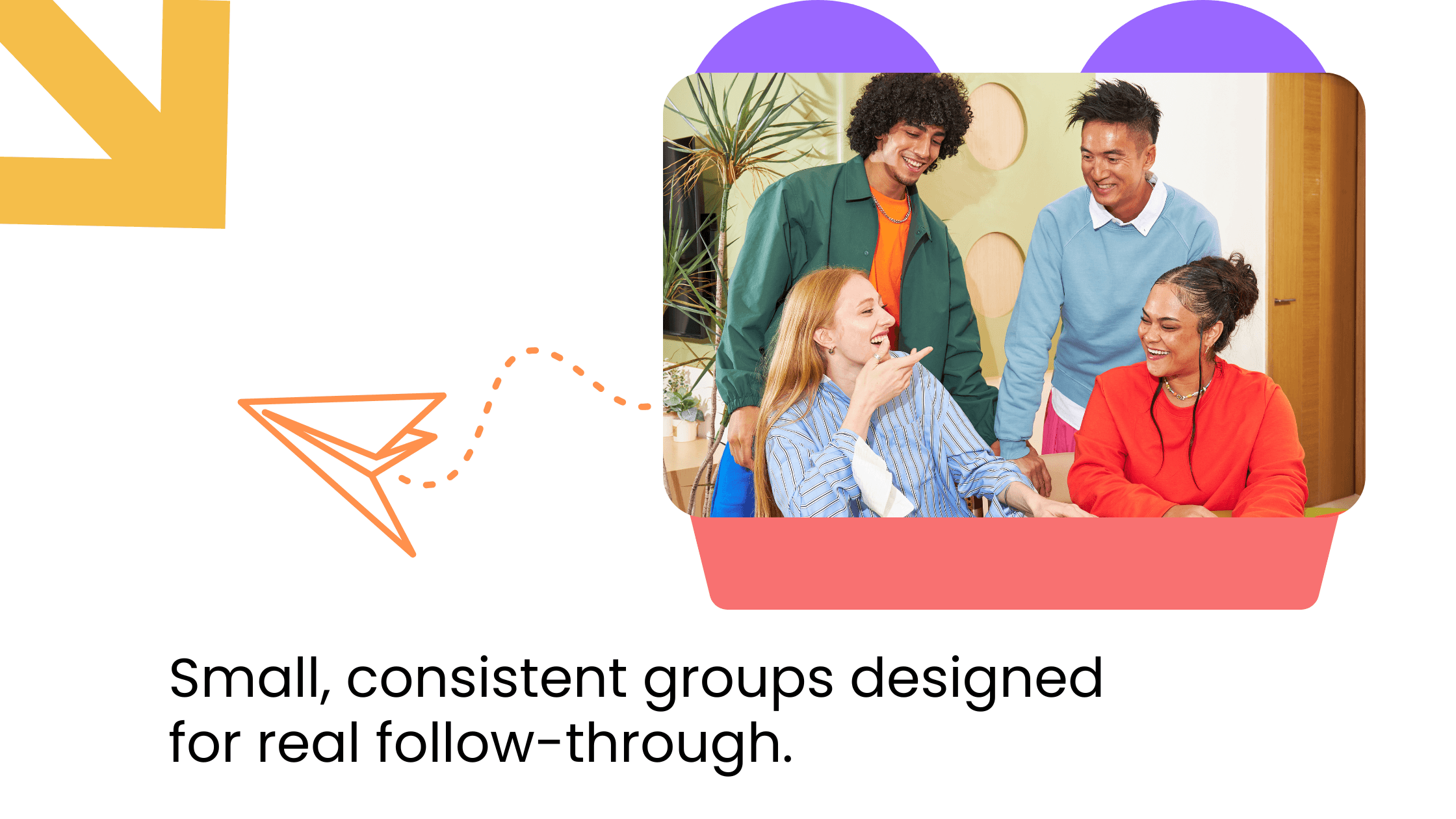
Accountability pods for coaching, sometimes called coaching accountability groups, are small, consistent peer groups inside a coaching community where members share progress, challenges, and follow-through on a predictable rhythm. The purpose isn’t motivation or advice. It’s visibility.
Unlike loose check-ins or open forums, coaching accountability groups work because the same people see each other show up over time. That continuity turns consistency into a social norm rather than a personal struggle.
Inside a coaching community, accountability pods act as the connective tissue between content and action. They don’t replace coaching. They reinforce it by making progress visible, shared, and expected.
Accountability Pods vs Group Coaching vs Mastermind Groups
These formats are often confused, which is why many accountability pods are designed incorrectly.
Group coaching is coach-led. The coach sets the agenda, delivers insight, and directs conversation. Accountability, if it exists, usually flows upward toward the coach.
Mastermind groups are peer-driven, not run by coaches, but outcome-focused. They emphasize strategy, feedback, and problem-solving, often among experienced participants with similar levels of progress.
Accountability pods are different. They are behavior-focused, not insight-focused. The goal isn’t better answers. It’s consistent action. Pods create a space where members are seen trying, not just succeeding.
When accountability pods are mistaken for group coaching, they become passive. When they’re mistaken for masterminds, they become intimidating. Both mistakes reduce participation.
Well-designed accountability pods are lightweight, predictable, and psychologically safe. They lower the bar for showing up instead of raising it.
Why Accountability Pods Work Better Inside Coaching Communities
Accountability pods work best when they live inside a coaching community, not alongside it.
Outside a community, pods often feel fragile. If one person disengages, momentum drops. If schedules slip, the pod dissolves. There’s no larger environment reinforcing participation.
Inside a community, pods are supported by shared norms, identity, and rhythm. Members don’t just show up for the pod. They show up because participation feels normal across the entire environment.
This is why accountability pods are most effective when they’re part of a broader trust and accountability system, not a standalone tactic. Communities that retain clients long-term design accountability into the structure, not into reminders or pressure.
The next section breaks down the most common reasons accountability pods fail, and what to fix before trying to scale them.
Why Most Accountability Pods Fail (Before They Ever Work)
Most articles about accountability pods’ best practices focus on how to start them. Very few explain why they quietly fail after week one.
The pattern is consistent. Coaches launch pods with good intent, early enthusiasm, and clear outcomes in mind. Participation looks promising at first. Then replies slow down. Check-ins become irregular. Eventually, the pod goes silent.
This doesn’t happen because people don’t care. It happens because the pod is poorly designed.
Accountability pods fail when structure, matching, and ownership are treated as secondary details instead of core requirements.
Many of these failures mirror the same patterns that cause disengagement across coaching communities more broadly.
Pods Without Structure Go Silent
An accountability pod without structure relies on memory and motivation. That’s the fastest way to lose consistency.
When there’s no fixed cadence, members are left guessing. Should they check in weekly or “when there’s progress”? Is silence acceptable? Is late participation okay? Ambiguity creates hesitation, and hesitation turns into inactivity.
Consistency doesn’t come from enthusiasm. It comes from predictability.
High-functioning accountability pods make participation obvious. Members know exactly when to show up, what to share, and how often interaction happens. When structure is missing, even committed members drift because there’s nothing anchoring behavior.
Silence isn’t a motivation problem. It’s a design failure.
Random Matching Creates Friction
Many accountability pods are formed randomly or based on surface-level criteria like niche or goals. This looks efficient, but it introduces friction almost immediately.
What matters more than shared goals is shared pace.
When one member is moving fast and another is struggling to keep up, participation starts to feel uncomfortable. Faster members feel held back. Slower members feel exposed. Both disengage, quietly.
Effective accountability pods group people with similar momentum, not just identical outcomes. When pace is aligned, progress feels relatable instead of intimidating. Updates feel safe to share. Showing up doesn’t require explanation or justification.
Random matching ignores this dynamic, which is why many pods fail even when participants are well-intentioned.
Coach-Dependent Pods Don’t Scale
The most common mistake is turning accountability pods into a coach-managed system.
When the coach sets reminders, tracks progress, and prompts participation, the pod may function temporarily. But it creates dependency. Members wait to be asked. Accountability flows upward instead of across.
This approach doesn’t scale, and it undermines the purpose of the pod.
Strong accountability pods are peer-led. The presence of others doing the work is what creates consistency, not oversight from the coach. When accountability is embedded socially, participation feels shared, not supervised.
Coach-dependent pods collapse as soon as attention shifts. Peer-driven pods persist because consistency belongs to the group, not the facilitator.
Most accountability pods fail because they’re treated as a tactic instead of a system. Fix the structure, matching, and ownership, and pods stop needing encouragement to work. They simply become part of how the community shows up.
The Ideal Accountability Pods Structure for Coaching Communities

The difference between accountability pods that quietly fade and those that last comes down to structure. In small group accountability for coaches, structure isn’t about control. It’s about removing friction, so showing up feels obvious.
When coaches search for accountability pods structure, they’re usually trying to answer three questions: How many people should be in a pod? How long should pods run? And what does a sustainable weekly rhythm actually look like?
Get these three right, and accountability becomes social instead of forced.
Ideal Pod Size (And Why 3-5 Works Best)
Pod size determines whether accountability feels supportive or overwhelming.
In coaching communities, three to five members is the sweet spot. At this size, visibility is high without turning participation into performance. Every update is noticed. Every absence is felt. But no one feels like they’re speaking to a crowd.
Smaller than three, and the pod becomes fragile. If one person drops off, momentum collapses. Larger than five, and responsibility diffuses. Members assume someone else will respond, and engagement thins out.
With three to five people, accountability stays personal. Members feel seen, not watched. That balance is what keeps participation consistent over time.
Fixed-Term vs Rolling Pods (What to Choose)
One of the biggest points of confusion in accountability pods structure is whether pods should be fixed-term or open-ended.
Rolling pods sound flexible, but they often weaken accountability. When members can join or leave at any time, commitment stays shallow. There’s no shared start, no shared finish, and no clear sense of progress.
Fixed-term pods work better for coaching communities. A defined duration, such as four or six weeks, creates a psychological container. Members know how long they’re committing and what they’re working toward together.
This time-bound structure increases follow-through. It’s easier to stay consistent when there’s a clear arc and a natural checkpoint for reflection or regrouping.
Rolling pods can work in mature communities, but for most coaches, fixed-term pods create stronger engagement with less effort.
Weekly Rhythm That Pods Actually Stick To
Accountability pods don’t fail because people forget. They fail because participation requires decision-making.
A strong weekly rhythm removes that decision entirely.
Pods that work well have one predictable moment each week where progress is shared. Not multiple prompts. Not constant check-ins. One clear, recurring action that everyone recognizes as “pod time.”
When rhythm is consistent, participation no longer feels optional. Members don’t ask whether they should check in. They already know when and how it happens.
This is how accountability pods maintain consistency without reminders. The rhythm does the work that motivation can’t.
Structure isn’t restrictive. It’s what makes accountability sustainable. When pod size, duration, and rhythm are intentionally designed, accountability shifts from willpower to a shared habit within the coaching community.
This rhythm works best when it’s reinforced by simple consistency rituals that anchor behavior across the entire community.
How to Match Members Into Accountability Pods
The success of accountability pods depends less on motivation and more on matching. In peer accountability in coaching communities, who you place together determines whether consistency feels supportive or stressful.
Most accountability pods fail quietly because members are matched too loosely. When expectations, pace, or stage don’t align, participation drops because the pod doesn’t feel safe or relevant.
Effective matching turns accountability from pressure into belonging.
Match by Stage, Not Just Goal
Goals sound like the obvious way to match people. In practice, they’re misleading.
Two members can share the same goal and still be at completely different stages. One may be starting from scratch, while another is refining execution. When this happens inside an accountability pod, the gap creates intimidation.
Early-stage members hold back. Advanced members disengage. The pod loses balance.
Matching by stage works better when members are navigating similar levels of experience and progress feels relatable. Questions feel safe to ask. Sharing unfinished work feels normal instead of embarrassing.
This is why strong peer accountability in coaching communities starts with stage alignment. Stage creates empathy. Empathy sustains participation.
Match by Pace, Not Personality
Personality-based matching is tempting, but it rarely holds up over time.
Introverts and extroverts can work well together. Different communication styles can complement each other. What breaks pods isn’t personality, it’s pace.
When one member moves quickly and another moves slowly, accountability starts to feel uneven. Faster members feel held back. Slower members feel pressured. Both outcomes reduce consistency.
Matching by pace keeps expectations aligned. When members naturally move at a similar rhythm, participation stays steady without constant adjustment. No one feels rushed. No one feels left behind.
Pace alignment is one of the most overlooked elements of sustainable accountability.
What to Do When Numbers Don’t Divide Perfectly
In real coaching communities, numbers are rarely clean.
You might have seven members when you want pods of four. Or eleven when you planned for three to five. Forcing perfect symmetry usually creates worse outcomes than small imperfections.
The goal is not numerical balance. It’s psychological safety.
If one pod ends up with an extra member, it’s often better to keep the group intact than to reshuffle people mid-cycle. Stability matters more than symmetry.
When numbers are uneven, choose consistency over optimization. Keep pods predictable, avoid constant reassignments, and let members build familiarity. Accountability strengthens through continuity, not constant adjustment.
Matching isn’t a logistical task. It’s a design decision that directly affects trust, safety, and long-term engagement. When members feel appropriately matched, accountability becomes something they lean into, not something they avoid.

How to Run Accountability Pods Week-to-Week

Once pods are structured and matched well, the next question coaches ask is how to run accountability pods in a coaching community without turning them into another thing to manage.
The answer isn’t more meetings or tighter control. It’s designing a simple weekly flow that fits naturally into how coaching communities already work.
When pods run smoothly week to week, accountability becomes predictable, lightweight, and self-sustaining.
Simple Weekly Pod Flow (Asynchronous First)
The most effective accountability pods are asynchronous by default.
A simple weekly rhythm works because it lowers friction. Members know exactly when to check in, what to share, and how to respond. There’s no scheduling stress, no pressure to perform live, and no dependency on perfect attendance.
Asynchronous pod check-ins allow members to participate on their own time while still maintaining visibility and momentum. Progress is shared in small, honest updates rather than polished reports. This keeps accountability human instead of performative.
In community-based coaching, asynchronous-first pods integrate naturally into daily routines, which is why they sustain consistency better than meeting-heavy formats.
When to Add Live Pod Check-Ins (And When Not To)
Live pod check-ins can strengthen connection, but only when they serve a clear purpose.
They work best as occasional reinforcement, not as the primary accountability mechanism. When live sessions are overused, pods start to feel demanding. Missed calls quickly turn into disengagement.
Adding live check-ins makes sense when pods need a reset, when trust needs to be deepened, or when members benefit from shared reflection at key milestones. They are most effective when treated as anchors, not obligations.
For most coaching communities, consistency comes from predictable asynchronous rhythms, with live moments used sparingly to reinforce alignment rather than replace structure.
The Role of the Coach vs the Role of the Pod
One of the most important design decisions is separating the coach’s role from the pod’s role.
The coach sets the system. The pod sustains it.
When coaches stay embedded in every pod interaction, accountability becomes dependent on their presence. This limits scale and creates passive participation. Members wait to be prompted instead of supporting each other.
In strong accountability pods, the coach defines expectations, cadence, and norms, then steps back. The pod takes ownership of weekly check-ins, responses, and follow-through itself.
This shift is what makes accountability scalable. Members aren’t showing up for the coach. They’re showing up because participation is expected and socially reinforced within the pod.
When pods run themselves week to week, accountability stops being a management task and becomes part of the community’s culture.
Accountability Pods Best Practices That Increase Retention
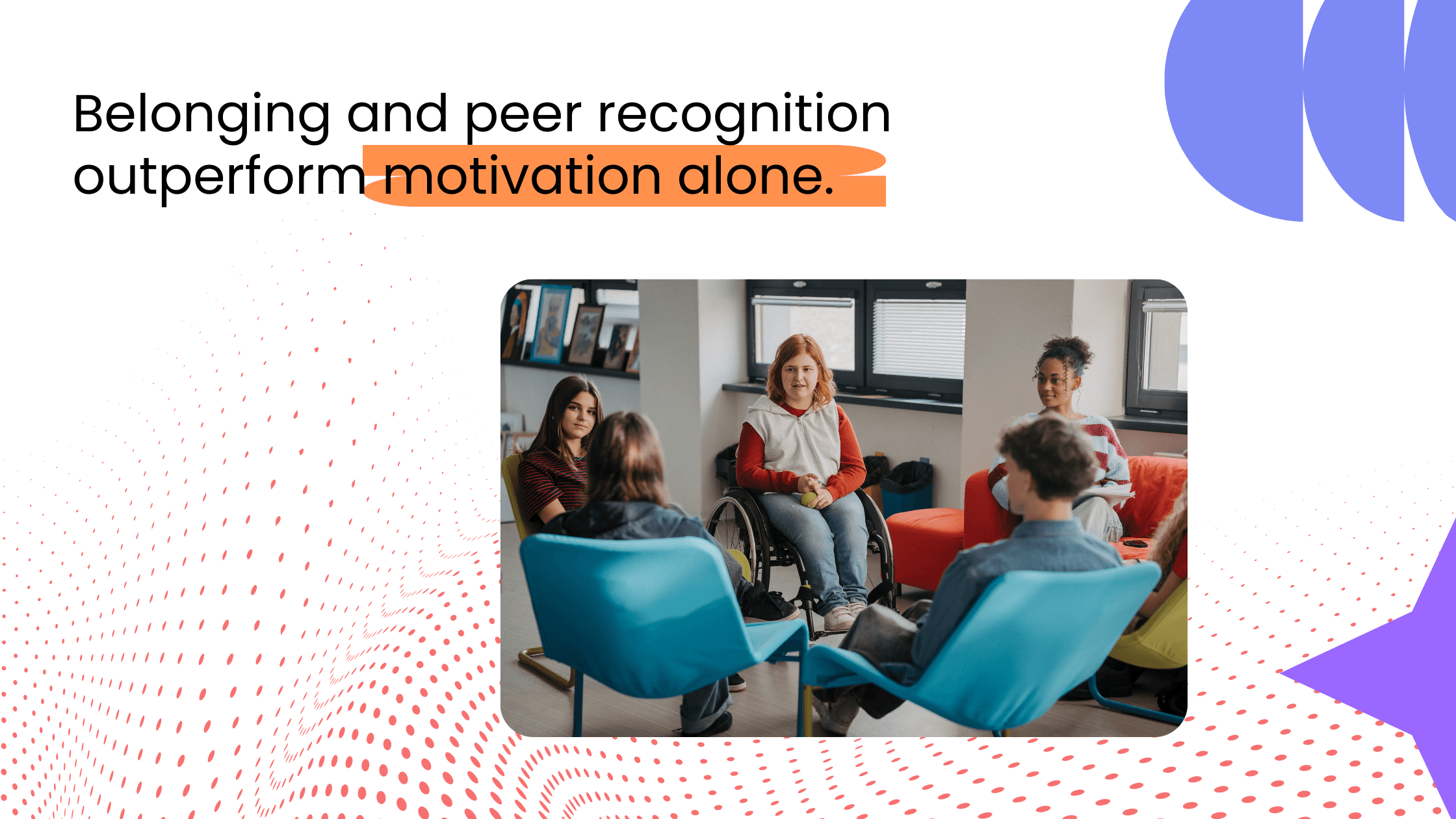
Accountability pods don’t improve retention by default. They improve retention when they’re designed to reduce friction, not increase pressure.
The most effective accountability pods best practices focus on making participation feel safe, visible, and worthwhile over time. When pods follow these principles, coaching community retention increases naturally, without constant intervention from the coach.
Make Progress Visible, Not Performative
Visibility is the engine of accountability, but only when it feels genuine.
In strong accountability pods, progress is shared in simple, honest updates. Members don’t feel the need to polish outcomes or prove productivity. They share what moved forward, what didn’t, and what they’re carrying into the next week.
This kind of visibility reinforces consistency without turning participation into a performance. When effort is seen and acknowledged, even small steps feel meaningful. That’s what keeps members returning week after week.
Performative updates may look impressive, but they quietly discourage participation. Visible, imperfect progress keeps pods alive.
Normalize Missed Weeks Without Shame
Missed weeks are inevitable. How a pod responds to them determines whether members re-engage or disappear.
In pods that improve retention, missed participation is treated as a normal part of progress, not a failure. Members are welcomed back without explanation or apology. The rhythm remains steady, even when individuals drop in and out temporarily.
Shame breaks consistency. Safety restores it.
When pods normalize missed weeks, members don’t associate absence with embarrassment. They feel safe returning, which is one of the strongest drivers of long-term coaching community retention.
Close the Loop on Wins (Even Small Ones)
Accountability only works when effort leads somewhere.
Closing the loop means acknowledging progress before moving on to the next action. This doesn’t require celebration or praise. It simply requires recognition.
When small wins are noticed and reflected back, participation feels complete. Members don’t just post updates and move on. They feel seen.
This reinforcement strengthens the accountability loop. Effort leads to visibility. Visibility leads to acknowledgment. Acknowledgment makes the next check-in easier.
Pods that close the loop consistently create momentum. Momentum keeps members engaged, even when progress is slow.
These best practices work because they support human behavior instead of fighting it. When accountability pods are designed this way, retention becomes a byproduct, not a goal you have to chase.
Scaling Accountability Pods as Your Community Grows
Accountability pods that work at 12 members often break at 60. What changes isn’t motivation, it’s coordination.
Scaling accountability pods in a coaching community requires shifting from manual effort → repeatable systems. The goal is to preserve trust, visibility, and rhythm while reducing dependence on the coach.
Here’s how high-retention communities scale pods without losing consistency.
Pods for 10-30 Members: Manual but Intentional
At this stage, accountability pods can be managed hands-on.
The coach (or community manager) usually:
forms pods deliberately
sets expectations clearly
observes participation closely
This level of attention works because the community is small enough for relationships to carry accountability. Members recognize each other quickly, and social visibility happens naturally.
The key risk here is over-involvement. If the coach becomes the center of every pod interaction, scaling later becomes harder. Even at this size, pods should be peer-led, with the coach acting as a guide, not an enforcer.
Pods for 30-100 Members: Light Automation + Templates
Once a community crosses 30 members, manual matching and follow-ups start to strain.
This is where structure matters more than presence.
Successful coaching communities at this size introduce:
clear pod templates for weekly check-ins
standardized rhythms everyone follows
simple onboarding explanations for how pods work
Pods still feel personal, but they no longer rely on memory or improvisation. Members know what to do each week without being reminded individually.
Light automation doesn’t reduce trust. It protects it. When expectations are consistent across pods, participation stays predictable, which directly improves retention.
Pods for 100+ Members: Rules, Rhythms, and Community-Wide Consistency
At scale, accountability pods stop being a feature and start becoming infrastructure.
The coach can no longer manage pods directly, and they shouldn’t try to.
High-performing communities at this level rely on:
fixed pod rules everyone understands
community-wide rhythms that anchor participation
shared language around progress and accountability
Consistency comes from alignment, not oversight.
When pods operate within a shared system, members experience the same level of safety and clarity no matter which pod they’re in. This prevents fragmentation and protects coaching community retention as numbers grow.
At this stage, many coaches also realize that rented platforms limit how much structure and visibility they can design. That’s often when coaches realize why they need a branded online coaching community, designed around their own systems instead of platform defaults.
This transition is what allows accountability systems like pods to scale without breaking trust or consistency.
Common Accountability Pod Problems (And How to Fix Them Fast)
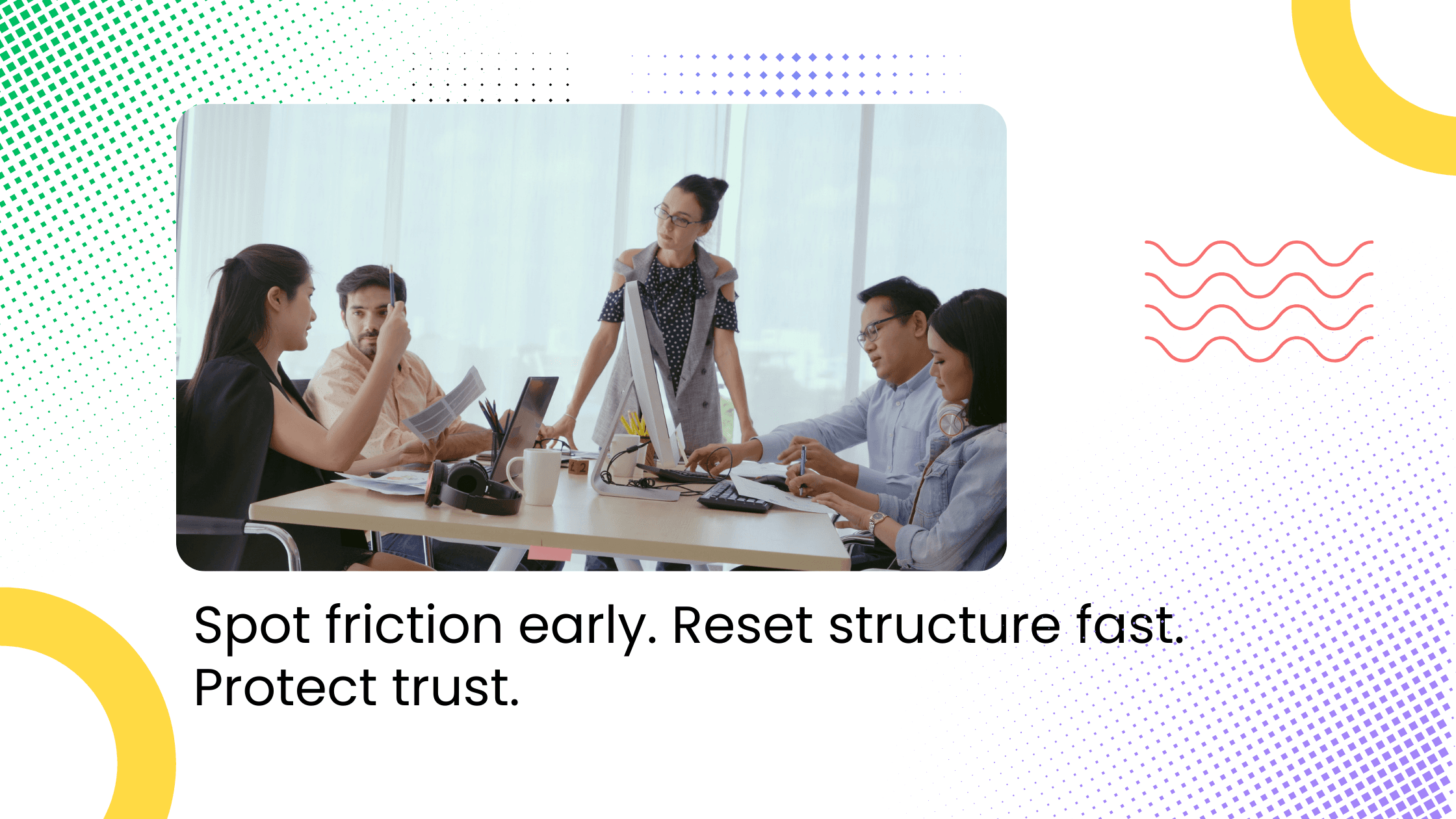
Even well-designed accountability pods hit friction. What matters is whether the system absorbs that friction or amplifies it.
The most effective coaching communities don’t avoid problems inside accountability pods. They anticipate them and design simple fixes that restore rhythm quickly. Below are the most common accountability pod problems and how high-retention communities resolve them without drama or micromanagement.
One Member Dominates the Pod
When one member takes up most of the space, pods don’t need confrontation. They need structure.
Dominance usually appears when expectations around sharing are unclear. Without a defined flow, confident members naturally fill the silence, while others pull back. Over time, this imbalance discourages quieter members from participating at all.
The fix is not to correct behavior, but to redesign interaction. Pods work best when everyone knows how much to share and when. When participation follows a predictable pattern, no one needs to compete for attention. Structure distributes visibility evenly, which restores balance without calling anyone out.
Pods Go Quiet After Week 2
This is one of the most searched accountability pod failures, and it rarely means the idea didn’t work.
Pods usually go quiet when rhythm breaks.
In the first week, novelty carries engagement. In the second, uncertainty appears. Members start asking themselves when to check in, how detailed to be, or whether others will respond. When those questions aren’t answered by the system, silence follows.
The fastest fix is to re-anchor the weekly rhythm. Pods that recover quickly do so by making participation predictable again. When members know exactly when and how to show up, consistency returns without reminders.
Quiet pods are almost always a sign of missing cadence, not lack of commitment.
This is not a motivation drop; it’s the first visible signal that the pod’s rhythm was never fully established.
Members Drop Out Mid-Cycle
Drop-offs feel personal, but they’re usually structural.
When accountability pods are framed as commitments, leaving feels like failure. Members who fall behind often exit silently instead of rejoining awkwardly later. This damages retention and weakens the pod.
High-performing coaching communities reframe pods as systems, not promises. Participation is treated as flexible and resumable. Members can step away and return without explanation.
This reduces pressure and increases long-term engagement. When re-entry feels safe, fewer people leave permanently. Pods become supportive environments, not contracts to maintain.
These fixes work because they remove emotional friction instead of adding control. Accountability pods succeed when the system absorbs human variability, not when it expects perfect behavior.
Accountability Pods Setup Checklist
Accountability pods don’t fail because coaches forget to remind people. They fail when expectations, rhythm, and visibility aren’t designed upfront.
This checklist distills the most important setup decisions that determine whether accountability pods in a coaching community create consistency or quietly fade out. Use it as a design reference, not a control mechanism.
Before You Launch Pods
Before the first pod starts, clarity matters more than enthusiasm.
Members should clearly understand what an accountability pod is for, how participation works, and what “showing up” actually looks like. Ambiguity at this stage creates hesitation that compounds later.
Set expectations around cadence, visibility, and tone. When members know how often to check in, how much to share, and how others will respond, trust forms early. This reduces anxiety and makes participation feel safe from the start.
Strong accountability pods are predictable before they are motivating.
During the First Two Weeks
The first two weeks determine whether a pod stabilizes or stalls.
Early behavior sets the norm. If participation feels inconsistent or unclear during this window, members subconsciously downgrade the importance of the pod. Once that happens, re-engagement becomes harder.
Focus on reinforcing rhythm, not intensity. Consistent, low-friction participation matters more than depth. When members experience steady visibility and acknowledgment early, accountability starts to feel natural.
This is also when members learn whether missed weeks are recoverable. How you respond here shapes long-term retention.
Monthly Pod Health Review
Pods rarely break suddenly. They weaken slowly.
A simple monthly review prevents silent churn by revealing where visibility is dropping, where rhythm is slipping, or where participation feels uneven. The goal isn’t to intervene constantly, but to recalibrate structure before disengagement becomes permanent.
Healthy accountability pods evolve with the community. Small adjustments in cadence, group size, or expectations can restore momentum without disrupting trust.
When pods are reviewed periodically, consistency becomes durable instead of fragile.
This checklist works because it treats accountability as a system to design, not a behavior to manage. When the environment is clear, predictable, and supportive, pods sustain themselves with minimal effort from the coach.
FAQs About Coaching Accountability Pods
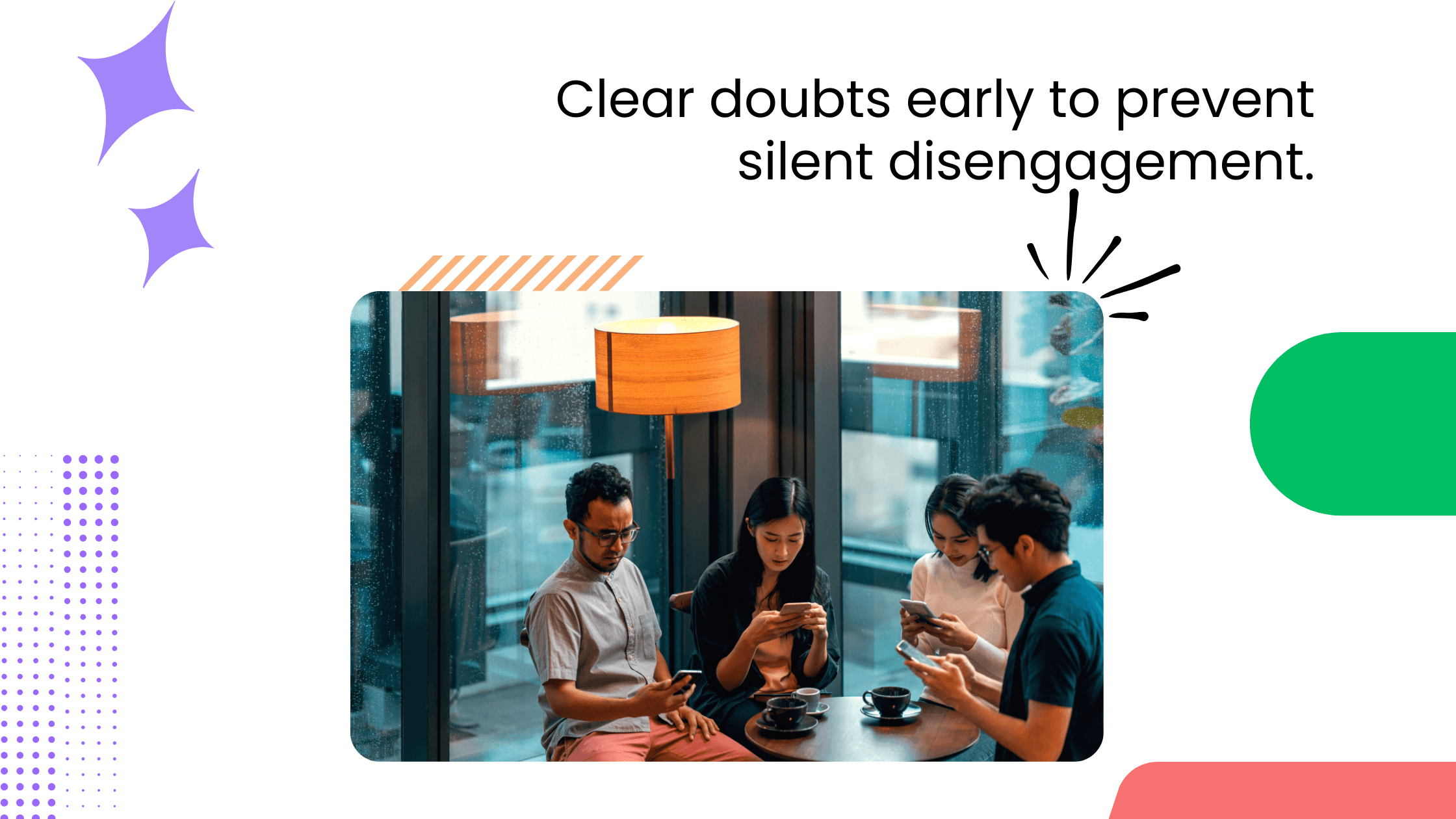
What Are Accountability Pods in Coaching?
Accountability pods in coaching are small peer groups inside a coaching community where members share progress regularly and support each other’s consistency. Unlike 1:1 check-ins or large group coaching, pods create shared visibility and social reinforcement, making accountability feel natural instead of enforced.
They work best when participation follows a clear rhythm and expectations are consistent across the community.
How Many People Should Be in an Accountability Pod?
The ideal size for accountability pods is usually three to five members.
This size creates enough visibility to reinforce consistency without making participation feel exposed. With fewer people, momentum depends too heavily on individuals. With more people, attention and follow-through start to dilute.
For most coaching communities, three to five members strike the best balance between support and accountability.
Do Accountability Pods Need Weekly Calls?
No. Accountability pods do not need weekly calls to be effective.
In many coaching communities, asynchronous check-ins work better than frequent meetings. They reduce scheduling friction and make participation easier to sustain over time. Live pod calls can be useful occasionally, but they should support the system, not replace it.
Consistency comes from rhythm and visibility, not from more meetings.
How Do Pods Improve Coaching Community Retention?
Accountability pods improve coaching community retention by making participation social and predictable.
When members see others showing up, sharing progress, and being acknowledged, consistency becomes normal. Pods reduce reliance on motivation and reminders by embedding accountability into the environment. This lowers disengagement and increases long-term retention across the community.
Final Takeaway
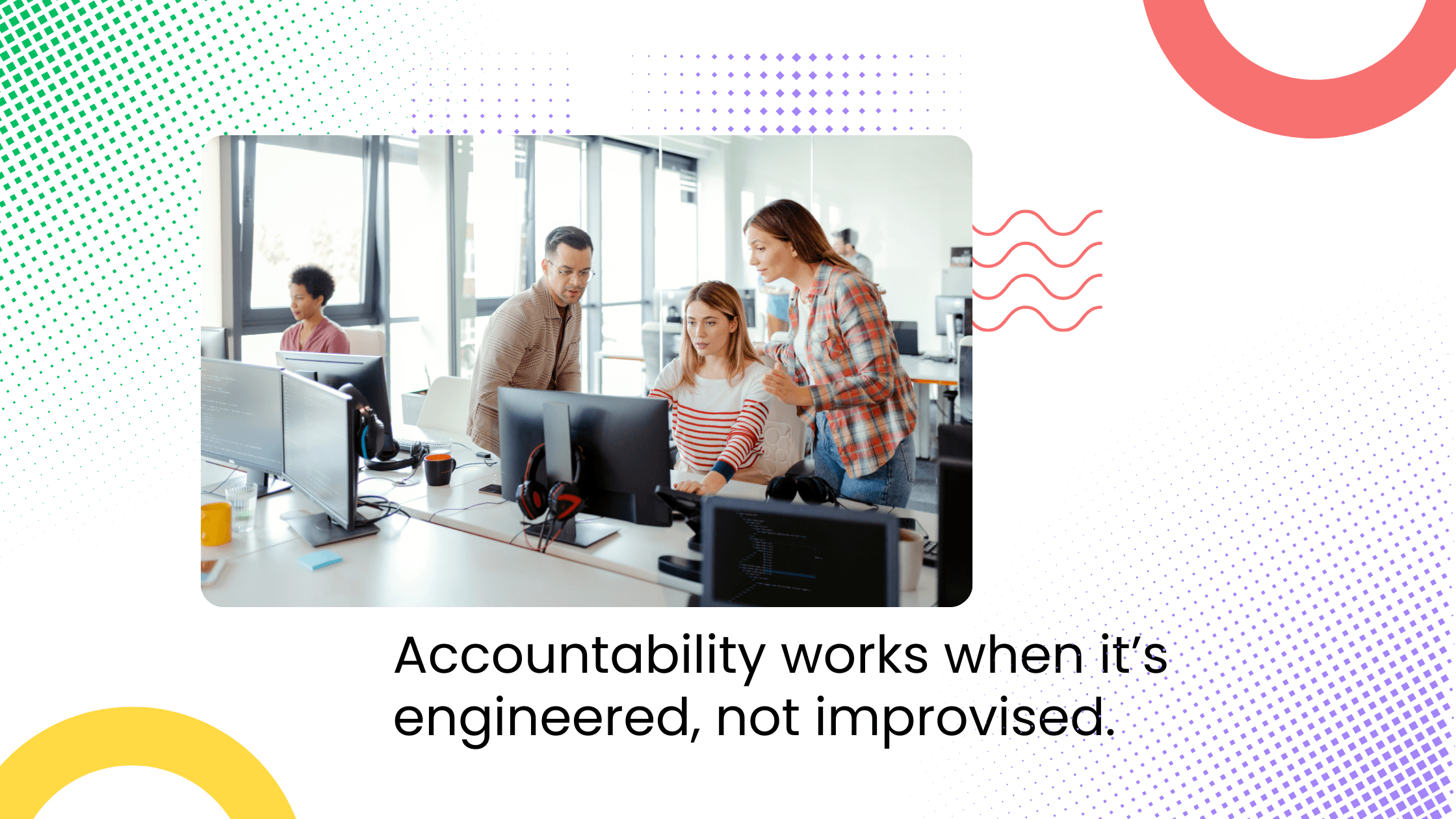
Accountability pods don’t work because people try harder.
They work because consistency becomes social, visible, and expected.
When pods are designed with clear structure, shared rhythm, and psychological safety, members don’t need to be chased. They show up because participation feels natural and supported.
If you’re running accountability pods inside a coaching community, structure matters far more than reminders.
If you want to design accountability systems that scale inside your own coaching community, you can explore how Wylo helps coaches build structured environments where consistency and retention happen by design.
Start a free Wylo trial and see how community design changes client engagement.

0mnath
Founder of Wylo, a highly comprehensive and customizable community platform for coaches, brands, and creators. Omnath helps coaches build structured, scalable, community-driven businesses through simple systems, clear frameworks, and high-quality client experiences.